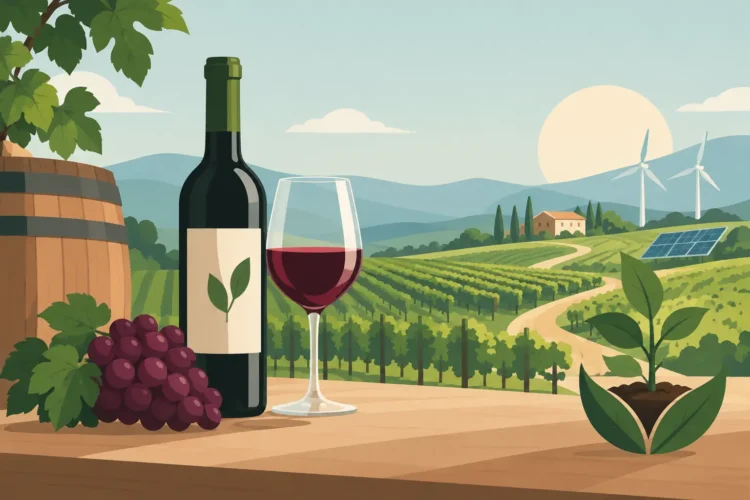
A wine bottle can tell a surprisingly big story. It might begin with cover crops buzzing with insects between the vines, continue with a grower using less water and fewer treatments, and end with a lighter bottle travelling to your door. Sustainable wine trends are making that story easier to see – but the language on a label can still feel rather crowded.
For wine drinkers, the good news is that sustainability is no longer confined to a tiny corner of the shelf. Across France, thoughtful growers are changing how they farm, make, package and sell wine. The more useful question is not simply, “Is this wine sustainable?” It is, “Sustainable in which way, and does that approach suit the wine I want to drink?”
Sustainable wine trends begin in the vineyard
The biggest environmental decisions in wine happen long before the grapes are picked. Vineyards can be managed as bare, highly controlled rows, or as living landscapes with healthy soil, plants, insects and wildlife playing a part. Increasingly, French estates are moving towards the latter.
One visible change is the use of cover crops between vine rows. These may be grasses, flowers or legumes, and they help protect soil from erosion, improve its structure and encourage biodiversity. In dry places, however, cover crops can compete with vines for precious water. A conscientious grower will adapt the approach to the season and site, rather than treating it as a fixed rule.
Many producers are also reducing synthetic herbicides and pesticides, working soils more carefully, composting grape skins and pruning material, and preserving hedges or woodland around their plots. These choices can take more time and labour than conventional farming. They can also make a vineyard more resilient over the long term, especially as heat, drought and erratic weather put pressure on familiar growing patterns.
This is why a smaller estate in the Loire, Languedoc or Rhône may speak as much about soil life as it does about tasting notes. Better farming is not merely a marketing flourish. Healthy soils can improve drainage, retain moisture and help vines cope with difficult vintages.
Organic, biodynamic and HVE: similar aims, different tools
Organic wine is usually the clearest place to start. Organic growers follow defined rules that restrict synthetic fertilisers, herbicides and pesticides. Certification matters because it means the claim has been independently checked, although organic farming does not automatically tell you everything about carbon emissions, bottle weight or working conditions.
Biodynamic farming builds on organic principles but takes a broader, more holistic view of the vineyard as an ecosystem. It often involves compost preparations, biodiversity and a farming calendar linked to natural cycles. For some drinkers, biodynamic wines offer a compelling sense of place and energy. For others, the philosophy may feel less persuasive than the practical results. Either way, the crucial point is that serious biodynamic growers tend to observe their vineyards very closely.
HVE, short for Haute Valeur Environnementale, is a French environmental certification. HVE Level 3 is the highest tier and assesses areas including biodiversity, plant-protection strategy, fertiliser management and water use. It can be a useful sign that an estate is measuring and improving its practices, particularly where full organic certification is not realistic. But it is not the same as organic certification, so it is worth understanding what the designation does – and does not – promise.
Less intervention, but not less care
Another major trend is the growing interest in low-intervention and natural wines. These terms generally point towards grapes grown with fewer chemical inputs and wines made with as little manipulation as possible in the cellar. Fermentation may happen with naturally occurring yeasts, filtration may be limited, and added sulphites may be kept low or omitted.
This can produce vivid, characterful wines, from a juicy Beaujolais to a cloudy, lightly sparkling pét-nat. It can also bring more variation from bottle to bottle, and occasionally flavours that are deliberately wild rather than classically polished. Neither style is inherently better. It depends whether you are looking for a fresh, dependable white for a midweek fish supper or a conversation-starting bottle for friends who enjoy trying something unexpected.
Sulphites deserve a little perspective. Sulphur dioxide has long been used in winemaking to protect wine from oxidation and spoilage, and it occurs naturally in small amounts during fermentation. A wine with no added sulphites has not necessarily had no sulphites at all. Lower-sulphur wines can be delicious and expressive, but they need careful handling and storage. The best producers use only as much as the wine genuinely needs, rather than turning a technical decision into a slogan.
The bottle is becoming part of the decision
Wine’s footprint does not end at the winery door. Glass is recyclable, but producing and transporting heavy glass takes energy. That is why lighter bottles are one of the most practical sustainable wine trends to watch. A well-made wine does not require an unnecessarily weighty bottle to taste serious.
For a UK buyer, this matters because French wine travels across the Channel before it reaches the table. A lighter bottle can reduce transport emissions across thousands of cases without changing what is in the glass. Recycled glass content, efficient case packing and consolidated deliveries all help too.
There are trade-offs. Very fine wines intended for decades of ageing may need particular packaging choices, and sparkling wine bottles must be strong enough to withstand pressure. Alternative formats can reduce packaging per litre, but they may not suit every occasion or every wine. A magnum remains a lovely centrepiece for a dinner party, even if it is not the lightest option to carry home.
Climate adaptation is changing French wine styles
Warmer seasons are already influencing what growers plant and how they work. Earlier harvests, heat spikes and drought are becoming more common in several French regions. In response, producers are protecting canopy shade, seeking cooler sites, adjusting pruning, improving water retention in soils and, where permitted, considering grape varieties better suited to warmer conditions.
For drinkers, this can mean wines with riper fruit, higher potential alcohol and softer acidity than they might remember from older vintages. Yet it does not mean every French wine is becoming heavy. Talented growers are finding freshness through earlier picking, higher-altitude parcels, north-facing slopes and careful cellar work.
This is where provenance becomes especially valuable. A generic bottle gives you little sense of who made it or how. A producer-led wine from a named appellation, vineyard area or family estate offers more context – and often more character. You can taste the difference between a sun-soaked southern red and a crisp, mineral white from a cooler Loire site, while knowing more about the hands behind each bottle.
How to choose sustainably without making it a homework assignment
Start with the style of wine and occasion you actually want. Then use sustainability information to narrow the field, rather than treating every certification as a test you must pass. If you want a bright, food-friendly white, look for an organic Loire or Alsace producer. For a generous red, explore an HVE or organic estate in the Rhône or Languedoc. If curiosity is the aim, try a low-intervention bottle alongside a more classic example and compare them over dinner.
Ask useful, specific questions: is the estate certified organic or biodynamic? Does it hold HVE Level 3? Are sulphites low, or simply not added? Is the bottle unusually heavy? Most importantly, who is the producer and what are they trying to achieve? A good independent merchant should make those answers feel welcoming, not worthy.
At Wine Affairs, that means choosing from French estates with clear provenance and using region, grape and farming credentials as practical ways to find a bottle you will enjoy. Bonjour, sustainability does not have to mean compromising on pleasure.
The most encouraging shift is that better choices are becoming deliciously ordinary: a fresh organic rosé for a sunny lunch, a biodynamic Burgundy for a special meal, or a carefully made HVE red for a Friday night roast. Pick the wine that suits your table, stay curious about the producer behind it, and let each bottle make your next choice a little more informed.