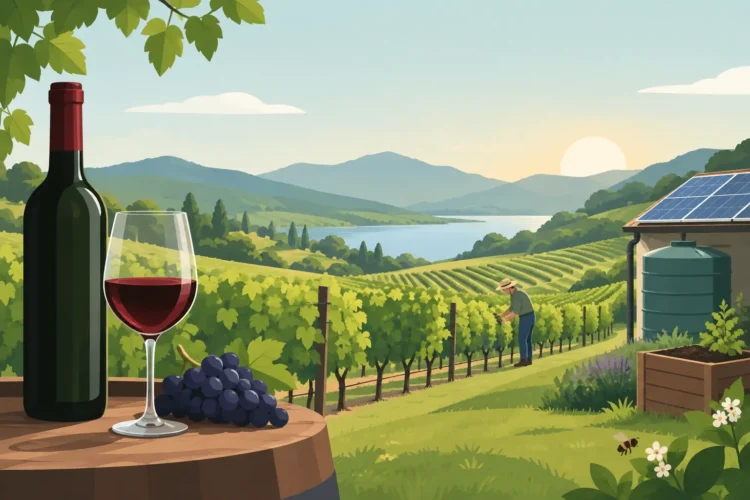
A bottle can tell you where a wine comes from, but not always how the vineyard was cared for. This sustainable vineyard practices guide helps make the language on French wine labels more meaningful, so you can choose a bottle for Sunday lunch, a gift or a midweek glass with greater confidence.
Sustainable wine is not one single farming method or a guaranteed flavour profile. It is a practical commitment to protecting soil, wildlife, water and the people who work among the vines, while still making wine that is delicious to drink. Some estates hold formal certification; others follow thoughtful methods without a logo on every label. Both are worth understanding.
A sustainable vineyard practices guide to the essentials
A vineyard is a working ecosystem, not simply a neat row of vines. The decisions made between those rows affect the health of the land for decades: whether soil can retain water in a dry summer, whether insects and birds have a habitat, and whether the vines can stay productive without an ever-increasing reliance on chemical inputs.
The most sustainable growers start with observation. They identify disease pressure, study their soils and respond to the season rather than treating every parcel in the same way. In humid parts of France, fungal disease can be a serious threat. In hot, dry regions, water stress may be the greater concern. There is no one-size-fits-all answer, which is why a useful sustainable wine conversation goes beyond a simple tick-box claim.
Healthy soil is the foundation
Living soils are central to long-term viticulture. Many growers sow cover crops such as grasses, clover or wildflowers between vine rows. These plants reduce erosion, improve soil structure and give beneficial insects somewhere to live. Legumes can also help make nitrogen available naturally.
Some estates compost grape marc, prunings and other organic matter, returning nutrients to the vineyard rather than relying solely on manufactured fertiliser. Others reduce ploughing, which can preserve soil life and moisture. The trade-off is that cover crops and reduced cultivation can compete with vines for water, particularly in very dry areas. A skilled grower adjusts the approach parcel by parcel, and sometimes season by season.
Biodiversity is not decoration
Hedges, trees, dry-stone walls, ponds and patches of uncultivated land may look charming, but they do serious work. They provide shelter and food for pollinators, birds and predatory insects that can help keep pests in balance. A more diverse landscape is often more resilient than a vast monoculture.
You may also see sheep grazing in vineyards during winter, when vines are dormant. They can manage vegetation and add natural fertiliser, reducing tractor passes. However, they must be removed before budbreak, when hungry animals could damage new growth. Sustainable farming is full of these practical details: a good idea only works when timing and local conditions are right.
Reducing sprays, not pretending vines need none
Vines are vulnerable to mildew, pests and disease. Claims that all responsible vineyards use nothing at all are usually too simplistic. The meaningful question is how a producer prevents problems, monitors risk and limits intervention.
Methods can include canopy management to improve airflow, careful pruning, disease-resistant plant material where permitted, pheromone disruption for certain insects, and targeted spraying instead of routine treatments. Weather stations and forecast tools can help growers apply treatments only when conditions demand it.
Organic vineyards do not use synthetic herbicides, fungicides or fertilisers, but organic farming can still use approved substances. Copper and sulphur are common examples for fungal protection. They have a long history in vineyards, though copper needs careful management because it can accumulate in soil. The best producers are candid about that challenge and work to reduce overall use wherever possible.
What organic, biodynamic and HVE actually mean
Wine labels can be useful, but the terms are not interchangeable. Knowing the distinction helps you buy according to what matters most to you.
Organic wine
For a French wine to be certified organic, the grapes must be grown under EU organic rules and the winemaking must follow defined standards. Look for the green leaf logo where it is shown, though a producer may also explain certification on the back label or in their wine information.
Organic certification gives a clear baseline: no synthetic pesticides or herbicides in the vineyard, with restrictions on inputs in the cellar too. It does not automatically mean no sulphites, vegan wine, biodynamic farming or a wild, cloudy style. Plenty of organic wines are polished, classic and wonderfully precise.
Biodynamic wine
Biodynamic farming builds on organic principles, treating the estate as a connected living organism. Growers use compost preparations, encourage biodiversity and may follow a lunar or cosmic calendar for certain vineyard tasks. It can sound mystical at first, but at its most useful it encourages close attention to soil vitality, plant health and natural rhythms.
Demeter and Biodyvin are two respected biodynamic certification bodies seen in French wine. Biodynamic wines can be vivid and characterful, but certification alone does not decide quality. As ever, the producer, site and vintage matter. Think of biodynamics as a farming philosophy with strict standards, not a promise that every bottle will taste the same.
HVE sustainable agriculture
HVE stands for Haute Valeur Environnementale, or High Environmental Value. It is a French environmental certification that assesses a farm’s approach to biodiversity, plant-protection strategy, fertiliser management and water stewardship. HVE Level 3 is the highest level and the designation most commonly highlighted on bottles and producer information.
HVE is not organic certification. An HVE estate may use some conventional treatments, but it is required to demonstrate measured environmental performance across the farm. For a grower moving away from intensive agriculture, it can be a valuable framework. For a buyer who wants the strictest limits on synthetic inputs, organic certification will usually be the clearer choice.
Sustainability continues in the winery and beyond
The vineyard is the biggest part of the story, but not the only one. Responsible producers also consider energy use, wastewater, bottle weight, packaging and transport. A lighter glass bottle generally requires less energy to make and less fuel to move, although it must still protect the wine properly. A heavy bottle may feel luxurious, but it is not automatically the more sustainable choice.
Water use in the cellar matters too. Cleaning tanks, barrels and equipment is essential for hygiene, yet thoughtful wineries recover water where possible and use efficient cleaning systems. Renewable energy, recycled packaging and local employment all contribute to the broader picture.
Then there is sulphur. Sulphur dioxide is used to protect wine from oxidation and spoilage, and it has been used in winemaking for centuries. Lower-sulphur wines can be expressive and appealing, but low intervention requires meticulous fruit, clean equipment and careful storage. “No added sulphites” means none were added during winemaking; it does not mean a wine contains no naturally occurring sulphites. It is a useful statement, not a universal measure of sustainability.
How to choose sustainable French wine with confidence
Start with what you value most. If avoiding synthetic vineyard treatments is your priority, seek certified organic bottles. If you are drawn to a whole-estate ecological approach, biodynamic producers are a natural place to explore. If you want a credible environmental step beyond conventional farming while keeping your options broad, HVE Level 3 is worth looking for.
Next, let region and style guide you. Organic Loire Cabernet Franc can be fresh and leafy beside roast lamb; biodynamic Alsace Riesling can bring lift and tension to spicy food; a carefully farmed Languedoc blend may offer generous Mediterranean fruit without a premium price tag. Sustainability should make discovery more interesting, not turn choosing wine into homework.
It also helps to look for transparency rather than perfection. A thoughtful producer will explain their farming, acknowledge difficult seasons and make clear whether they are certified, converting or simply working with lower-impact methods. Small family estates may not always have the budget or administration for every certification, even when their vineyard work is exemplary.
At Wine Affairs, filtering by farming approach alongside region, grape and style makes it easier to follow your own taste as well as your values. Bonjour, your best next bottle may be one that matches the meal on the table, the people around it and a vineyard cared for with the future in mind.