What if your pursuit of a world-class vintage could actually restore the very soil that produced it? You likely value the heritage of a complex French vintage, yet the modern wine aisle often feels cluttered with confusing buzzwords. It’s frustrating to seek out an organic fine red wine only to be met with vague claims of “natural” or “sustainable” that don’t quite explain what’s in the bottle. You deserve clarity, not just a label.
We’ll show you how to cut through the greenwashing to find authentic bottles that support biodiversity without sacrificing luxury. You’ll learn exactly how to distinguish between organic certifications and the French HVE-3 standard, ensuring your next purchase supports genuine environmental progress. We’ll also explore how to source these boutique French gems with reliable next-day delivery across the UK. This guide provides the expertise you need to host a dinner party with a conscience or gift a bottle that tells a story of sustainable craft.
Key Takeaways
- Learn how to identify an authentic organic fine red wine by looking for certified pesticide-free viticulture and superior terroir.
- Understand the French HVE-3 certification and how it acts as a trusted benchmark for biodiversity in sustainable winemaking.
- Explore how organic practices influence the unique flavour profiles, tannin structures, and acidity of classic French styles, from full-bodied Bordeaux to elegant Pinot Noir.
- Discover the best ways to source boutique French reds with next-day UK delivery whilst ensuring your bottles are stored at the perfect temperature.
- See why a curated selection from an expert independent merchant offers more depth and quality than generic supermarket brands.
What Defines an Organic Fine Red Wine in 2026?
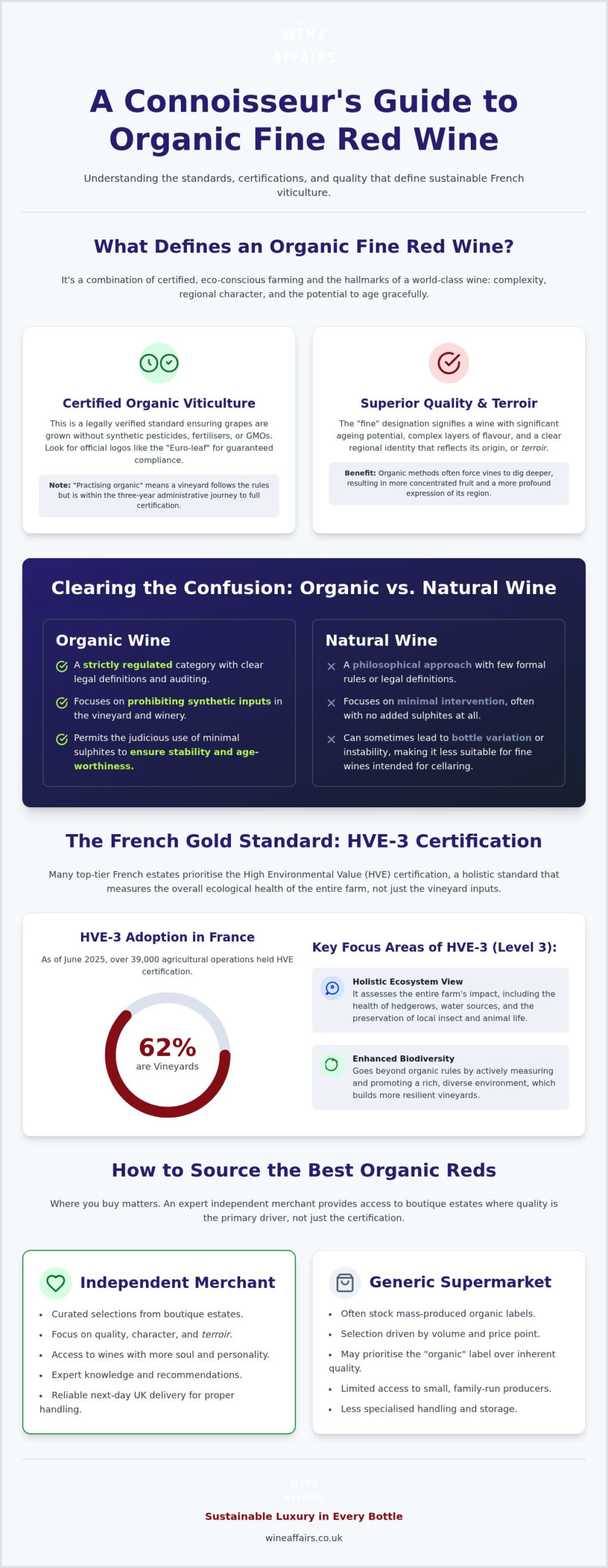
What makes a bottle truly exceptional in 2026? It’s no longer enough for a wine to simply taste good; it must also do good. An organic fine red wine represents the pinnacle of this shift, combining the rigorous standards of certified pesticide-free viticulture with the historical prestige of superior terroir. While “organic” tells us how the grapes were grown, “fine” tells us how the wine behaves in the glass and the cellar. To earn the “fine” moniker, a wine must demonstrate significant ageing potential, complex layers of flavour, and a clear regional identity that commands respect amongst collectors.
In the UK, we’re seeing a decisive move toward sustainable luxury. Discerning drinkers now prioritise transparency over flashy labels. They want to know that their favourite Bordeaux or Rhone blend hasn’t been touched by synthetic chemicals. This involves adhering to the principles of organic farming, which prohibit GMOs and synthetic fertilisers. However, you’ll often see “practising organic” on a label too. This usually means the vineyard follows organic rules but hasn’t yet completed the three-year administrative journey to full certification. For the connoisseur, seeking out the official “Euro-leaf” or “AB” logo ensures that these standards are legally verified.
The Intersection of Quality and Ecology
Organic methods don’t just protect the earth; they elevate the fruit. By removing chemical crutches, vines are forced to dig deeper into the subsoil, often resulting in a more profound expression of terroir and more concentrated flavours. In the context of organic certification, a fine wine is a superior expression of its region that possesses the structural balance to evolve beautifully in the bottle over many years. Supermarkets often stock mass-produced organic labels. Conversely, an independent merchant like Wine Affairs focuses on boutique estates where quality is the primary driver, not just the certification. These smaller producers often have the freedom to experiment, resulting in reds with more character and soul.
Organic vs. Natural Red Wine: Clearing the Confusion
Confusion often reigns when comparing organic and natural wines. Organic wine is a strictly regulated category with clear legal definitions and auditing. The “natural” movement is more of a philosophical approach with fewer formal rules, which can sometimes lead to bottle variation or instability. For an organic fine red wine to reach its full potential, it requires the stability that precise, organic winemaking provides. This often includes the judicious use of minimal sulphites. While some natural wines eschew them entirely, fine red wines usually require a tiny amount to prevent oxidation and ensure the wine survives the journey to your table in peak condition. This balance ensures the wine remains vibrant and age-worthy.
The French Standard: Organic Certifications and HVE-3
France sets the global tempo for sustainable viticulture. It’s a landscape where centuries of tradition meet a radical, modern commitment to the earth. When you select an organic fine red wine from a prestigious French estate, you’re buying into a rigorous system that values the vine as part of a living, breathing ecosystem. While the “Euro-leaf” is a familiar sight, the French approach goes much deeper, often involving layers of certification that ensure the longevity of the land.
The High Environmental Value (HVE) certification has become the “gold standard” for biodiversity amongst top-tier producers. As of June 2025, over 39,000 agricultural operations in France were HVE-certified, with vineyards making up a staggering 62% of that total. Many of the most famous châteaux in Bordeaux and the Rhone Valley actually prioritise HVE-3 (the highest level) over a purely organic label. This is because HVE-3 takes a more holistic view of the farm, measuring everything from the health of the hedgerows to the preservation of local insect life. It’s a broader ecological framework than the USDA organic certification requirements, which focus more strictly on inputs and sulphite levels.
By 2026, the impact of climate change has made these sustainable practices non-negotiable. Rising temperatures and unpredictable weather patterns across regions like the Loire Valley have forced vintners to build more resilient vineyards. Organic and HVE-3 soils, rich in microbial life, retain water better and help vines withstand heatwaves. If you’re curious about how these standards translate to the glass, you can explore our curated selection of HVE-3 and organic French reds to experience the difference for yourself.
Understanding the HVE-3 Label
The HVE-3 certification is built upon four essential pillars that ensure a vineyard’s environmental performance is second to none:
- Biodiversity conservation: Encouraging natural flora and fauna to thrive amongst the vines.
- Plant protection strategy: Drastically reducing the use of pesticides and herbicides.
- Managed fertiliser use: Preventing nutrient runoff into local water sources.
- Water resource management: Ensuring every drop is used efficiently and responsibly.
The Role of Terroir in Organic Production
Organic farming acts as a megaphone for the soil. Without synthetic fertilisers masking the unique mineral profile of the land, the “soul” of the terroir becomes remarkably prominent in the finished wine. Regions like Bordeaux and the Loire Valley have become leaders in this space, proving that organic fine red wine can rival any conventional counterpart in complexity and depth. French terroir, with its ancient limestone and gravel deposits, provides the natural drainage and mineral complexity that allow organic red grapes to thrive without chemical intervention.
Comparing Styles: From Full-Bodied Bordeaux to Elegant Pinot Noir
Selecting an organic fine red wine is an exercise in discovering the true personality of a region. When synthetic inputs are removed, the subtle differences in terroir become much more apparent. This isn’t just a matter of ethics; it’s a matter of physical structure. Organic viticulture often results in grapes with thicker skins, a natural defence mechanism developed by the vine. This leads to more refined, integrated tannins and a deeper, more stable colour profile. Additionally, the absence of synthetic nitrogen fertilisers ensures the vines maintain a higher natural acidity. This provides a vibrant backbone that keeps the wine feeling energetic and fresh, even after years in the cellar.
The ageing potential of these wines is often superior to their conventional counterparts. Because of that natural acidity and robust tannin structure, organic reds possess an inherent balance that allows them to evolve gracefully. We’re also seeing a fascinating rise in organic Malbec from Cahors and Cabernet Franc from the Loire Valley. These varieties, once perhaps considered secondary to the big names, are now being produced with incredible precision. They offer a sophisticated alternative for those seeking complexity beyond the traditional powerhouses.
Organic Bordeaux: The Benchmark of Fine Red Wine
The transition toward organic practices in prestigious areas like Medoc and Saint-Émilion has been a defining trend of the last decade. An organic Cabernet-Merlot blend from these regions delivers a profound depth of flavour. Expect a glass filled with dark forest fruits, cedar, and a hint of graphite. The colour is typically a rich, opaque garnet, reflecting the health of the fruit. For collectors, Bordeaux remains the ultimate organic fine red wine because its structural integrity ensures it will continue to improve for decades.
Lighter Elegance: Organic Pinot Noir and Gamay
If you prefer something more delicate, organic Pinot Noir from the Loire or Alsace is a revelation. These wines are remarkably transparent, allowing the bright red cherry and wild strawberry notes to shine through without being masked by heavy oak or chemical residues. Similarly, low-intervention Gamay from Beaujolais offers a silky texture and refreshing lift. These lighter styles are exceptionally versatile amongst modern British cuisine. Try pairing an elegant organic Pinot Noir with pan-seared duck or an earthy mushroom risotto to see how the wine’s natural acidity cuts through richer flavours with ease.
Buying and Serving Fine Organic Red Wine
Once you’ve secured a bottle of organic fine red wine, the focus shifts to preservation. In the UK, central heating is the silent enemy of a great vintage. Storing a delicate French red near a radiator or in a bright, sunlit kitchen can lead to “cooked” flavours. This is where the vibrant, tiered fruit notes you’ve paid for turn jammy, flat, and dull. You want to maintain a consistent, cool temperature, ideally between 12°C and 14°C. If you don’t have a traditional stone cellar, a dedicated wine fridge or the coolest, darkest cupboard in your home will suffice. Consistency is more important than the absolute temperature; rapid fluctuations cause the cork to expand and contract, potentially letting in oxygen.
How do you identify a truly well-curated list when shopping online? Look for transparency. A specialist merchant should provide detailed producer profiles, specific vintage notes, and clear information on certifications like HVE-3 or the Euro-leaf. If a website only lists the grape and the price without mentioning the estate’s philosophy or the specific terroir, they likely haven’t met the winemaker. A curated selection reflects a personal relationship between the merchant and the vineyard. To start building your own cellar with confidence, browse our curated selection of organic fine red wine for guaranteed quality and reliable next-day UK delivery.
Storage and Preservation Tips
Organic wines often have lower levels of added sulphites compared to conventional bottles. This makes them slightly more sensitive to their environment. UV light can cause “light strike,” a chemical reaction that creates off-flavours, whilst constant vibrations from nearby appliances can disturb the natural sediment in older reds. It’s best to keep your bottles horizontal to keep the cork moist and airtight. Organise your collection by their projected drinking window. This ensures that a peak-condition Saint-Émilion isn’t accidentally left at the back of the rack past its prime.
The Art of Decanting Organic Reds
Younger organic reds benefit significantly from a vigorous decant. Aeration helps to dissipate any reductive notes sometimes found in low-sulphur wines, allowing the hidden fruit and floral aromas to bloom. For a full-bodied Bordeaux blend, two hours of air is ideal; for a lighter Loire Pinot Noir, thirty minutes is often enough. Use a wide-bottomed decanter to maximise the surface area exposed to oxygen. Pair this with large, tulip-shaped glassware. The broad bowl and narrow rim concentrate the complex aromatics, ensuring every nuance of the organic viticulture is delivered straight to your senses.
Why Source Your Organic Red Wine from Wine Affairs?
Choosing an organic fine red wine shouldn’t feel like a gamble. While large retailers might stock a few organic labels as a box-ticking exercise, we treat every bottle as a testament to the artistry of French viticulture. Wine Affairs isn’t just a shop; it’s a curated gateway to the most conscientious estates in France. Led by Marc and our team of experts, we bridge the gap between small-scale independent growers and your dinner table. We believe that sustainable luxury is best served with a personal touch whilst maintaining a deep respect for the soil.
Our expertise extends beyond single bottles. We specialise in sourcing eco-friendly magnum bottles that make a statement at any event, alongside thoughtfully assembled mixed wine cases for those who love to discover new profiles. Every selection in our cellar reflects a commitment to quality that mass-market outlets simply cannot replicate. We’re here to guide you toward the perfect pour, whether you’re a seasoned collector or a curious newcomer.
A Curated Selection of French Excellence
Supermarkets often prioritise volume over the nuances of terroir. Why settle for a mass-produced bottle when you can enjoy a wine with a true sense of place? Our independent status allows us to maintain strict quality control over our range of organic, biodynamic, and HVE-3 certified reds. We look for wines that tell a story of the land. Supporting independent French growers ensures that traditional, chemical-free methods continue to thrive. When you buy from us, you aren’t just purchasing a product; you’re supporting a philosophy of environmental stewardship that protects the future of winemaking.
Seamless UK Delivery and Service
Planning a last-minute gathering? We understand that fine wine needs often arise at short notice. That’s why we offer reliable next-day delivery across the UK, ensuring your bottles arrive safely and promptly. We don’t hide behind automated bots. If you need advice on a specific vintage or help choosing between a Bordeaux and a Rhone blend, you can reach out to us directly via WhatsApp or email. It’s this blend of digital convenience and human expertise that sets us apart. Explore our curated collection of organic fine red wines today and experience the difference of a true specialist.
Elevate Your Cellar with Sustainable French Excellence
Choosing a bottle of organic fine red wine is a statement of intent. It shows you value the heritage of French viticulture whilst supporting the health of the planet in equal measure. We’ve explored how rigorous HVE-3 standards and organic certifications ensure that the wine in your glass remains a pure expression of its terroir. From the structural depth of a Bordeaux blend to the ethereal lift of a Loire Pinot Noir, these wines offer a complexity that rewards the patient collector and the casual enthusiast alike.
Remember that these bottles are living, breathing things. Proper storage and thoughtful decanting are the final steps in a journey that began in a pesticide-free vineyard years ago. As a specialist independent UK merchant, we take pride in bridging the gap between dedicated French growers and your home. Whether you’re preparing for a grand dinner party or seeking a meaningful gift, our expertly curated selection provides quality you won’t find on supermarket shelves. We’re here to ensure that your discovery of sustainable luxury is as seamless as it is rewarding.
Browse our exclusive range of Organic French Red Wines for next-day UK delivery and discover the pinnacle of conscientious winemaking today. We look forward to helping you find your next favourite vintage.
Frequently Asked Questions
Is organic fine red wine better for you than conventional wine?
Organic wine reduces your exposure to synthetic pesticide residues and chemical additives often found in conventional viticulture. While all wine should be enjoyed in moderation, organic certification ensures the grapes were grown without GMOs or synthetic fertilisers. This results in a cleaner product that prioritises natural fermentation. Many drinkers find that the absence of these chemical inputs leads to a more pleasant experience both during and after consumption.
Does organic red wine contain sulphites?
Yes, most organic red wine contains sulphites, though usually at significantly lower levels than conventional bottles. Sulphites occur naturally during the fermentation process. However, organic regulations in the UK and EU strictly limit the amount of additional sulphur that can be added. These preservatives are essential for protecting organic fine red wine from oxidation and bacterial spoilage, ensuring the liquid remains stable and vibrant during transit and storage.
Can organic fine red wine be aged as long as traditional wine?
Absolutely; many organic fine reds possess the structural integrity to age just as long as, or even longer than, conventional wines. The high natural acidity and robust tannin structure found in organic grapes provide a built-in preservative system. When balanced correctly, these elements allow prestigious French reds to evolve and improve over decades. The key is starting with superior fruit from healthy, chemical-free soils that can withstand the test of time.
What is the difference between organic and HVE-3 wine?
Organic certification focuses on the total prohibition of synthetic inputs, whereas HVE-3 is a French standard that measures a vineyard’s overall ecological performance. HVE-3 (High Environmental Value) rewards biodiversity, water management, and reduced pesticide use across the whole farm. While a wine can be both, HVE-3 is often chosen by top châteaux who want to preserve local ecosystems whilst maintaining some flexibility during extreme weather conditions. It is a holistic benchmark for sustainability.
How can I tell if a red wine is truly organic in the UK?
You can verify a wine’s organic status in the UK by looking for the Euro-leaf logo or a recognised certification body code, such as GB-ORG-05. All organic fine red wine sold in Britain must comply with strict labelling laws. These logos guarantee that the producer has undergone an annual audit to prove they meet legal standards. If you are buying online, a reputable specialist merchant will always display these certifications clearly within the product description.
Why is organic fine red wine often more expensive?
The higher price reflects the increased labour costs and lower yields associated with chemical-free farming. Without synthetic herbicides, vineyards require more manual work, such as mechanical weeding and hand-harvesting. Additionally, organic farmers often accept lower yields to ensure the highest fruit quality. You are paying for the intensive care required to produce a luxury product that doesn’t rely on cheap chemical shortcuts. It is an investment in both flavour and environmental health.
How should I store organic red wine to prevent spoilage?
Store your bottles in a cool, dark place with a consistent temperature of around 12°C to 14°C to prevent premature ageing. Because organic wines often have lower sulphur levels, they can be more sensitive to heat and light. Keep bottles horizontal to ensure the cork stays moist and provides a perfect seal against oxygen. Avoid areas with high vibration or frequent temperature swings, as these can disturb the sediment and dull the wine’s complex aromatics.
Does Wine Affairs offer next-day delivery on all organic reds?
Yes, Wine Affairs provides national next-day delivery across the UK for our entire curated selection of organic and HVE-3 wines. We understand that fine wine is often needed for special occasions or last-minute gifts. Our logistics are designed to handle delicate bottles with care, ensuring they arrive at your doorstep in peak condition. Simply place your order through our secure online shop, and our team will organise the rest, bridging the gap between boutique French vineyards and your table.