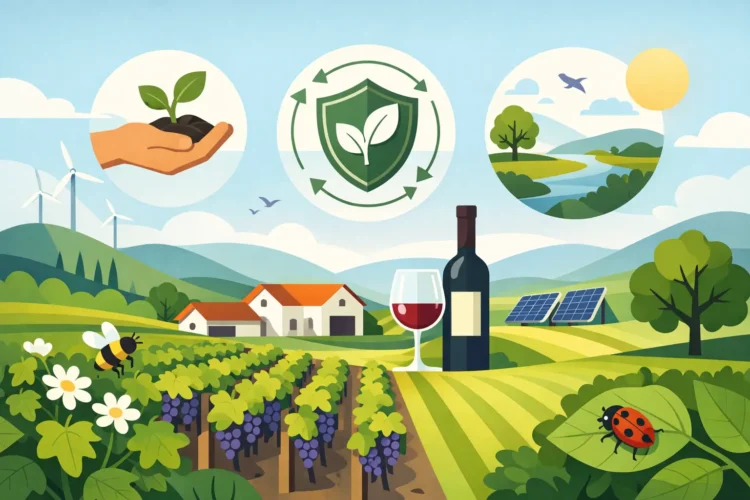
A French wine label can tell you far more than whether the bottle is red, white or rosé. If you have spotted HVE on a wine and wondered, what does HVE mean wine-wise, it is a sign that the estate has been independently recognised for its environmental farming practices.
HVE stands for Haute Valeur Environnementale, or High Environmental Value. It is a French certification for farms and vineyards that work to reduce their environmental impact while protecting the living landscape around them. For wine drinkers, it is a useful clue: the producer is making a formal commitment to more sustainable viticulture.
It is not exactly the same as organic or biodynamic wine, though the three approaches can overlap. Understanding the difference makes it much easier to choose a bottle that suits both your taste and your values.
What does HVE mean in wine?
HVE is a French state-backed environmental certification, applied at farm level rather than simply to one wine. A wine estate with HVE certification has been assessed on how it manages its vineyard and wider land, from hedgerows and wildlife habitats to water, fertiliser and crop-protection products.
The scheme has three levels. Levels 1 and 2 show a progression towards environmental practice, while HVE Level 3, often shown as HVE3, is the highest and most meaningful level for shoppers. This is the level most commonly highlighted on a bottle, producer page or winery communication.
In plain English, HVE 3 means the vineyard must demonstrate strong performance across four core areas: biodiversity conservation, plant-protection strategy, fertiliser management and water management. The exact route to certification can vary according to the estate, its region and its crops, but the principle is practical rather than purely promotional. Producers need to measure what they do and meet defined requirements.
That matters in wine because vineyards are not isolated factories. They sit within soils, slopes, rivers, insects, trees and neighbouring farms. How a grower manages that ecosystem has a direct bearing on the character and long-term future of the place that produces the wine.
What HVE vineyards do differently
An HVE-certified estate may preserve or plant hedges, trees, flower strips and grassy areas that provide habitats for birds, pollinators and beneficial insects. In a landscape dominated by vines, these features help restore variety and create natural corridors for wildlife.
Vineyard teams also look closely at their approach to sprays. HVE does not ban synthetic treatments outright, but it requires growers to monitor and manage their use carefully. That can mean using weather data to avoid unnecessary applications, choosing more targeted treatments, maintaining spray equipment properly and using alternatives where suitable.
Fertiliser management is another important part of the picture. Excess nitrogen can affect soil health and watercourses, so certified estates are expected to understand what their vines need rather than applying inputs as a routine. Cover crops between vine rows, compost and more precise soil monitoring are all common tools, although each producer will work differently.
Water is particularly relevant in warmer, drier French regions. HVE producers must consider how water is used and protected. In some vineyards, better soil cover and organic matter can help retain moisture naturally. In others, careful irrigation management may be essential. Sustainable farming is rarely a one-size-fits-all exercise.
Is HVE wine organic?
No. HVE and organic certification are different systems with different rules.
Organic wine starts in the vineyard. Grapes must be grown without synthetic herbicides, synthetic pesticides or artificial fertilisers, subject to the standards of the certification body. The term organic is therefore more prescriptive about which products a grower can and cannot use.
HVE is broader in one sense and less restrictive in another. It considers the whole environmental management of the farm, including biodiversity and resources, but it can permit certain synthetic crop-protection treatments where organic farming would not. An HVE wine is not necessarily pesticide-free, and it is not automatically made with organic grapes.
Biodynamic wine takes organic farming further by treating the estate as a self-sustaining living system. Biodynamic producers work with specific preparations, composting practices and a farming calendar linked to natural rhythms. Some drinkers are drawn to its philosophy; others simply enjoy the energy and individuality often found in these wines.
Natural wine is different again. It is not a single legally defined certification. Usually, the term refers to wine made from organically or biodynamically farmed grapes with minimal intervention in the cellar, often including little or no added sulphur. That said, the meaning can vary from producer to producer.
The useful shorthand is this: organic focuses on permitted vineyard inputs, biodynamic adds a distinct farming philosophy, natural usually describes low-intervention winemaking, and HVE measures wider environmental performance at the farm. A producer can be HVE certified and organic, or HVE certified without being organic.
Does HVE mean a better bottle of wine?
Not automatically, but it can be a very positive sign.
Certification tells you about the way an estate manages its vineyard, not whether you will prefer a Chablis to a Beaujolais, or a crisp Picpoul to a generous Côtes du Rhône. Quality still depends on the site, grape variety, vintage, yields, harvest decisions and skill in the cellar.
However, thoughtful farming often gives producers a closer relationship with their vines. Healthy soils, living cover crops and careful observation can encourage resilience and help grapes ripen with better balance. Those benefits do not guarantee a particular flavour, but they are part of the foundation for expressive, well-made wine.
HVE can be especially helpful when you want a more environmentally considered bottle without assuming that every sustainable wine must taste light, unusual or expensive. You can find HVE estates making classic, familiar French styles: fresh Loire Sauvignon Blanc, fragrant Provence rosé, supple Bordeaux, spicy Languedoc reds and elegant sparkling wines.
How to spot HVE wine when shopping
Look for the HVE logo or wording such as Haute Valeur Environnementale and HVE 3 on the bottle, back label or wine description. Some producers may focus their label space on the appellation and estate name, so the certification is not always immediately obvious from the front of the bottle.
It is also worth reading the producer story, rather than treating a logo as the whole decision. A good description will explain how the grower works, whether they are organic or biodynamic as well, and what is happening in the cellar. Sustainable credentials are most meaningful when they sit alongside real detail about the people and place behind the wine.
If you are comparing an HVE bottle with an organic one, there is no universal winner. An organic wine may be the right choice if avoiding synthetic vineyard chemicals is your priority. An HVE wine may appeal if you value independently assessed work on biodiversity, water and farm-wide environmental management. The best option depends on the producer, region and what matters most to you.
HVE, sulphites and winemaking
HVE certification is primarily about farming. It does not tell you how much sulphur has been added to the finished wine, whether it was filtered, or whether cultured yeasts were used in fermentation.
That distinction is useful because sulphites are often confused with sustainable farming. Some HVE wines will be made in a conventional cellar style, with sulphur added at levels the winemaker believes will protect freshness and stability. Others may be low-intervention or have no added sulphites. Neither approach is automatically better in every situation.
A delicate white travelling from France to your door may benefit from careful sulphur management. Equally, a vivid, unfiltered red from a hands-off producer can be thrilling when well made and well stored. The sensible question is not simply whether sulphur is present, but whether the wine is balanced, sound and made with care.
Choosing HVE wine with confidence
Think first about the occasion, then use HVE as one part of your selection. For a midweek supper, you might choose an HVE Loire white with goat’s cheese, fish or asparagus. For a roast dinner, an HVE Rhône blend can offer ripe fruit, savoury herbs and plenty of character. If you are buying a gift, an estate-led HVE wine makes an easy conversation starter without feeling worthy or preachy.
At Wine Affairs, we see HVE as a useful route into French wines made by growers who are taking responsibility for their land while still putting pleasure in the glass. The most rewarding bottle is one whose farming story, regional character and flavour all feel right for the table in front of you.
Next time HVE catches your eye, let it prompt a little curiosity. Ask where the vines grow, what the producer is protecting and, most importantly, what you fancy eating alongside it.