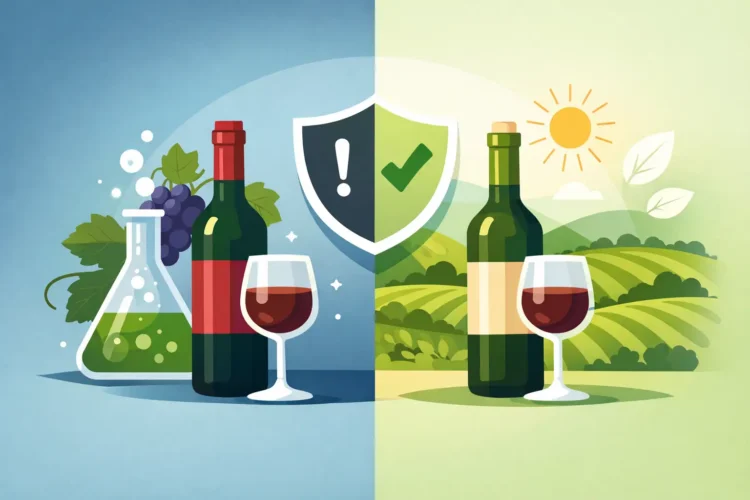
A bottle marked ‘no added sulphites’ can feel like the obvious healthier choice, particularly if conventional wine has left you flushed, headachy or simply wondering what is in your glass. But are sulphite free wines safer? For most people, the honest answer is: not automatically. They can be an excellent choice for certain drinkers and a compelling expression of low-intervention winemaking, but the right bottle depends on why you are avoiding sulphites in the first place.
Sulphites are one part of a much bigger picture that includes alcohol, serving size, food, hydration, individual sensitivity and how a wine has been made. Understanding their role makes it much easier to choose confidently – whether you favour organic Loire Sauvignon, a lively pét-nat or a classic, carefully made Bordeaux.
What sulphites actually do in wine
Sulphites are sulphur dioxide compounds. They occur naturally during fermentation, so even a wine made with nothing added can contain a small amount. Winemakers may also add sulphur dioxide at different stages to protect wine from oxygen and unwanted microbes.
In practical terms, sulphites help a wine retain its freshness, fruit character and colour. They can prevent a white wine from browning too quickly, stop a red becoming dull or overly oxidative, and reduce the risk of spoilage between cellar and glass. This is not about disguising poor wine. Used thoughtfully, sulphur is a long-established winemaking tool that helps preserve what the grower has achieved in the vineyard.
European labelling rules require wines containing more than 10mg per litre of sulphites to state ‘contains sulphites’. That declaration is useful, but it does not tell you how much is in the bottle. A wine with a very modest addition and one with a much higher level can carry the same wording.
Are sulphite free wines safer for allergies?
For someone with a diagnosed sulphite sensitivity, lower-sulphite or no-added-sulphite wines may be a sensible option, but it is worth speaking to a doctor or allergy specialist first. Genuine reactions to sulphites are uncommon, although they can be serious, especially for some people with asthma. Symptoms may include wheezing, hives or swelling, and anyone who has had a significant reaction should not test a new bottle casually at home.
It also helps to be precise with the language. A ‘sulphite-free’ wine is often shorthand for a wine with no added sulphites. Because fermentation produces sulphites naturally, truly zero-sulphite wine is unusual. If sulphites must be strictly avoided for medical reasons, check the producer information and seek professional advice rather than relying on front-label phrasing alone.
For most drinkers who suspect an intolerance, the cause is less clear. Wine contains many naturally occurring compounds, including histamines and tannins, while alcohol itself can cause flushing, disturbed sleep, dehydration and headaches. A rich red with a late finish, two generous pours and little water alongside it is a very different experience from one glass of crisp white wine with supper.
Sulphites and wine headaches: the common misconception
Sulphites have acquired a reputation as the culprit behind the ‘red wine headache’, but the evidence does not make that simple claim. Dried fruit can contain considerably more sulphites than wine, yet it is not routinely blamed for the same next-day effects.
Alcohol is the more likely starting point. It affects hydration, sleep and blood vessels, and it is easy to drink more than intended when a bottle is delicious and the table is lively. Histamines, congeners and tannins may also matter for particular people. Red wines can feel more troublesome for some drinkers, but that does not prove sulphites are responsible.
If you are curious, try a calm and useful comparison. Choose two wines on separate occasions, drink the same modest amount, eat beforehand and have water with both. One could be a no-added-sulphite wine; the other a conventionally made, lower-sulphite wine from a producer you trust. Keep a note of the style, quantity and how you feel. It is far more informative than assuming every headache has one explanation.
The trade-off: freshness, stability and style
No-added-sulphite wines can be wonderfully vivid. They often show immediate fruit, texture and a sense of place with very little standing between grape and glass. When made by a meticulous grower with healthy fruit and excellent cellar hygiene, they can be thrilling.
They can also be less predictable. Without added sulphur, a wine has less protection from oxygen and microbial activity. It may develop sooner, vary more from bottle to bottle, or change rapidly after opening. A faint spritz, cloudiness or savoury character is not necessarily a fault – these can be deliberate or harmless features of low-intervention wine – but they may surprise someone expecting a polished, classic profile.
That does not make conventional wine less natural or less safe. Organic and biodynamic growers may use sulphur carefully because it allows them to bottle a stable wine with minimal intervention elsewhere. Equally, a no-added-sulphite wine is not automatically organic, biodynamic or better for the environment. Vineyard practice, transport, packaging and the producer’s overall approach all count.
How to choose lower-sulphite wine with confidence
Start with your reason for seeking it out. If you enjoy energetic, unfiltered wines and want to support growers working with very little in the cellar, no-added-sulphite bottles are well worth exploring. Serve them at the recommended temperature, store them somewhere cool and dark, and plan to enjoy them soon after opening. They are often at their best when shared rather than slowly nursed over several days.
If you are looking for a gentler option after finding heavily processed wines unappealing, do not limit yourself to one label claim. Look for producer-led organic, biodynamic or sustainably farmed wines where the winemaking is transparent and the fruit is properly cared for. Dry whites and rosés can sometimes have lower sulphite levels than sweet wines, because residual sugar can require more protection, though there is no universal rule. The individual wine matters more than a broad category.
For a dinner party, think about style as well as philosophy. A delicate no-added-sulphite Gamay can be charming with roast chicken, charcuterie or mushroom dishes. For a bottle you need to open a week after delivery, or to take to a large gathering where it may sit on the table for hours, a carefully sulphured organic wine may offer more dependable freshness.
Wine Affairs curates French wines with these distinctions in mind, including organic, biodynamic, sustainable and no-added-sulphite choices. The useful question is not simply ‘which bottle has the fewest additives?’, but ‘which bottle suits the occasion, my taste and the way I want it to be made?’
Who should be especially cautious?
Anyone with known sulphite sensitivity, severe asthma or a history of reactions should take medical advice before drinking wine marketed as low sulphite or no added sulphites. Lower is not the same as absent, and a label cannot replace individual clinical guidance.
The wider health advice around alcohol still applies whatever the wine’s sulphite level. No-added-sulphite wine is not a health drink, and it does not remove alcohol-related risks. If you are pregnant, taking medication that may interact with alcohol, managing a health condition, or choosing not to drink, the safest option is to avoid alcohol or seek advice from a healthcare professional.
For everyone else, moderation remains more meaningful than chasing a supposedly ‘clean’ bottle. Enjoy wine with food, leave room for water, and let a good bottle be part of the evening rather than the whole plan.
A thoughtful no-added-sulphite wine can be a lovely way to taste a grower’s fruit in a more immediate form. Choose it for its character, the care behind it and the pleasure it brings to the table – not because the absence of one ingredient promises a risk-free glass.