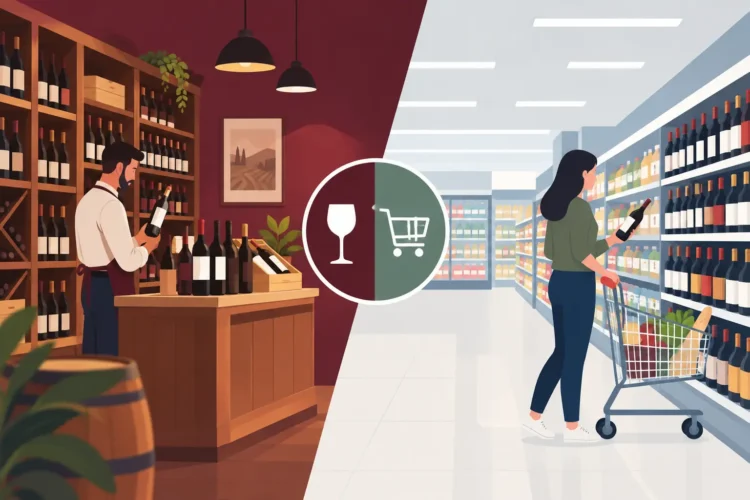
A wine merchant versus supermarket decision usually begins in front of a shelf: one bottle has a familiar label and a tempting offer; the other comes with a producer’s name, a vineyard story and perhaps a recommendation for tonight’s supper. Neither route is automatically better. The right choice depends on whether convenience, price, discovery, provenance or a particular style of wine matters most to you.
For everyday wine drinkers, the real difference is not simply where you buy. It is how much information, choice and support you receive once you have decided what you fancy drinking.
Wine merchant versus supermarket: the key difference
A supermarket is built to serve a very broad shop. Its wine aisle needs bottles for a last-minute barbecue, a midweek pasta, a birthday card run and a big weekend shop. That can mean strong availability, recognisable brands and sharp promotional prices, particularly on popular grapes such as Sauvignon Blanc, Pinot Grigio and Malbec.
An independent wine merchant starts from a different place. Rather than aiming to stock a little of everything, a good merchant selects wines around producers, regions, farming and character. The range is usually smaller than a national supermarket’s overall wine operation, but more intentional. You may find several expressions of Loire Chenin Blanc, for example, each chosen because it shows something different about Vouvray, Saumur or Anjou.
That focus matters when you want more than a serviceable bottle. It gives you a route into wines with a clear sense of place: a peppery Rhône Syrah, mineral Chablis, pale Provençal rosé or a juicy Languedoc red made from organically farmed grapes.
When the supermarket is the sensible choice
Supermarkets earn their place in the wine world. They are convenient, widely accessible and often very good at covering familiar styles at entry-level prices. If you need a bottle quickly for a spontaneous dinner, or know exactly which wine you want, picking one up with the groceries is hard to beat.
Their buying power can also create genuinely good value, especially during promotions. A well-priced own-label Côtes du Rhône or a reliable bottle of sparkling wine can be a perfectly sensible purchase. Major retailers increasingly employ capable buyers too, so a supermarket bottle is not automatically anonymous or poor quality.
The trade-off is depth. Shelf space is limited and must turn over quickly. Wines that need explanation, come from tiny estates or sit outside fashionable grapes can be harder to justify. A supermarket may carry one organic option from a region; a specialist is more likely to help you compare organic, biodynamic and sustainably farmed producers from that same area.
There is also the question of timing. Supermarket offers can make the original price difficult to read. A bottle advertised at a dramatic discount may still be good value, but it is worth judging it by what is in the glass rather than by the size of the red sticker.
What a wine merchant adds
The strongest reason to use a merchant is not snobbery. It is guidance. Wine can be wonderfully specific, but labels do not always make it easy to understand what you are buying. A merchant can translate French appellations, unfamiliar grapes and farming terms into a useful answer to a straightforward question: will I enjoy this with roast chicken, spicy food or a Friday night sofa supper?
That advice becomes especially valuable when buying for others. If you are sending a gift, planning a dinner party or choosing bottles for a wedding meal, a recommendation can prevent the familiar panic purchase of an expensive label that does not suit the occasion.
Specialists also tend to offer more producer continuity. Once you find an estate you enjoy, you can explore its white, red and rosé wines, different vintages or a step up to a single-vineyard cuvée. You are building knowledge through taste, not trying to memorise shelf labels.
At Wine Affairs, that might mean filtering French wines by region, grape or appellation, then asking for help with the food on the table and the flavours you usually enjoy. It is a more personal way to buy online without requiring you to speak fluent wine jargon.
Provenance is more than a back-label story
Provenance means knowing where a wine comes from, who made it and, ideally, how the grapes were grown. This does not guarantee that every bottle will suit your palate, but it gives your choice context.
For French wine, origin can be particularly useful. Burgundy Pinot Noir and Alsace Pinot Noir are made from the same grape, yet often taste strikingly different because of climate, soil and winemaking tradition. A merchant can help you choose between them without pretending that one is objectively superior.
Provenance also brings smaller producers into view. Many excellent estates do not have the scale or marketing budget needed for widespread supermarket listings. Their wines may be available in modest quantities, but that scarcity can reflect real vineyard limits rather than artificial exclusivity.
Price: cheaper bottle or better value?
It is easy to assume that supermarkets are always cheaper and merchants are always pricier. Sometimes that is true, particularly for single bottles at the lowest price points. Supermarkets can distribute enormous volumes efficiently, and their promotions can be compelling.
But value is not just the ticket price. With very inexpensive wine, a larger share of what you pay covers duty, VAT, packaging, transport and retail costs. As the bottle price rises, more of your money can go towards the wine itself. That does not mean every more expensive bottle is better, but it explains why a modest step up can bring noticeably more flavour and balance.
Merchants may offer value in other ways: mixed cases that let you try several styles, savings when you buy six bottles, producer-led wines with fewer layers between estate and customer, or informed recommendations that reduce disappointing purchases. If you regularly buy two bottles that sit untouched at the back of a cupboard, a better-chosen case may be the thriftier option.
Be realistic, though. A merchant cannot always match a supermarket’s loss-leading offer. If your priority is the lowest possible price for a familiar style tonight, the supermarket may win. If your priority is finding a distinctive bottle that feels worth opening, the calculation changes.
Sustainability: look past the green leaf on the label
Environmental credentials are one area where specialist selection can make a meaningful difference. Supermarkets now stock more organic and lower-intervention wines than they once did, which is encouraging. Yet the information can be brief, and the choice often limited.
A merchant with a clear sustainability focus can explain the differences. Organic farming avoids synthetic herbicides and pesticides in the vineyard. Biodynamic farming goes further, treating the vineyard as a living system and following a more holistic set of practices. HVE, or High Environmental Value, is a French certification that assesses biodiversity, plant protection, fertiliser use and water management. HVE3 is its highest level.
None of these terms is a magic quality stamp. Organic wine can be disappointing; conventionally farmed wine can be excellent and responsibly made. Natural wine is an even broader term, often associated with low-intervention winemaking and sometimes no added sulphites, but styles vary considerably. The useful question is not, “Is this virtuous?” It is, “What does this producer do, and does the wine taste good to me?”
A good merchant should answer without preaching. Sustainability is most persuasive when it sits alongside freshness, flavour and a producer’s long-term care for their land.
Convenience has changed
The supermarket’s historic advantage was simple: it was there when you needed it. That still matters. But online merchants have narrowed the gap with next-day delivery, carefully packed mixed cases and recommendations available before you order.
Online buying can be particularly handy if you live outside a town with a good independent shop, want to restock for entertaining, or prefer to choose without hovering beneath fluorescent lights. The key is not to replace every quick bottle with a lengthy research project. Keep a few reliable favourites at home, then use a merchant when you want to explore, plan or buy with more intent.
So, where should you buy your wine?
Use the supermarket when speed, familiar brands and a keen offer are the priority. Choose a wine merchant when you want a bottle with a clearer story, help matching food and flavour, more meaningful sustainable options or a route beyond the usual aisle staples.
You do not need to pick a side forever. Bonjour, try treating the supermarket as useful for urgency and the merchant as your guide for discovery. Start with one question – what are we eating, who are we sharing it with, and how adventurous do we feel? The answer will usually point you towards the right bottle.