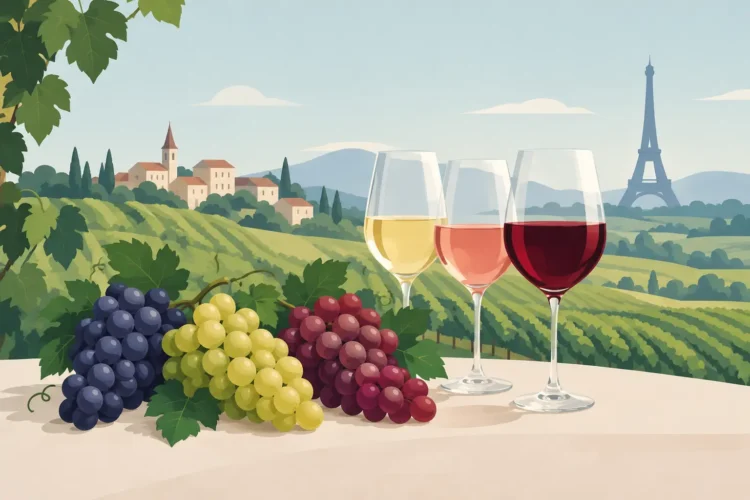
French wine labels can feel as though they are testing you. A bottle from Sancerre may not say Sauvignon Blanc; a red Burgundy may not say Pinot Noir. Yet a little grape knowledge goes a long way. This wine grape varieties guide explains the flavours behind the names, so you can choose French wine for a Tuesday supper, a proper roast, or a bottle worth sharing without relying on guesswork.
The useful starting point is this: grapes provide the character, but place and producer shape the final glass. Chardonnay grown in Chablis tastes markedly different from Chardonnay from a warm corner of the Languedoc. Farming choices matter too. Organic, biodynamic and HVE-certified estates can all make excellent wines, but these terms describe how the vineyard is managed rather than guaranteeing one particular flavour.
Wine grape varieties guide: the French essentials
Sauvignon Blanc
Expect freshness first: citrus, gooseberry, cut grass, white peach and, in cooler sites, a stony or flinty edge. Sauvignon Blanc is the grape behind the Loire’s Sancerre, Pouilly-Fumé and Touraine, although it is also grown in Bordeaux and across southern France.
Choose it when you want a bright, dry white with oysters, goat’s cheese, asparagus or a fragrant Thai-style curry. Loire Sauvignon is often taut and mineral; Bordeaux examples may be rounder, particularly when blended with Sémillon. If sharp, zingy whites are not your thing, look towards a softer Sauvignon blend or a warmer-region expression.
Chardonnay
Chardonnay is brilliantly adaptable, which is why it can seem like several grapes in one. In Chablis, it is typically lean, citrus-led and mineral. In Burgundy’s Côte de Beaune, it can bring orchard fruit, hazelnut, cream and subtle oak. Further south, expect riper peach, melon and a fuller texture.
It is the sensible choice for roast chicken, creamy mushroom dishes, richer fish and hard cheeses. Oak is the main style clue to look for: unoaked Chardonnay keeps the fruit and freshness in focus, while barrel ageing can add toast, vanilla and a broader feel. Neither is inherently better – it depends on the food and your preference.
Chenin Blanc
Chenin Blanc deserves more attention from anyone who likes personality in a white wine. It is central to the Loire, particularly Vouvray, Saumur and Savennières, and can be dry, off-dry, sparkling or sweet. Typical notes include apple, quince, pear, chamomile, honey and a distinctive waxy richness, usually held together by lively acidity.
That acidity makes Chenin especially flexible at the table. Try a dry bottle with pork, roast squash or a creamy fish pie. An off-dry style is a clever partner for lightly spiced dishes. For a celebratory alternative to Champagne, Loire sparkling Chenin can offer terrific value and plenty of character.
Pinot Noir
Pinot Noir is famous in Burgundy, where it makes reds ranging from delicately fragrant to quietly powerful. Think red cherry, raspberry, wild strawberry, rose, earth and, with age, savoury woodland notes. It tends to have softer tannins than Cabernet Sauvignon, so it can feel elegant rather than heavy.
A lighter Pinot suits charcuterie, duck, mushroom risotto, salmon or a Sunday roast with all the trimmings. Burgundy may command high prices because of its small vineyards and complex classifications, but excellent Pinot Noir also comes from Alsace, the Loire, Jura and cooler southern sites. The grape is sensitive to where it grows, which makes it fascinating, but it also means one bottle can differ greatly from the next.
Cabernet Sauvignon and Merlot
These are Bordeaux’s best-known red grapes, although they travel widely. Cabernet Sauvignon brings blackcurrant, cedar, structure and firm tannins. Merlot is usually plummier, softer and more immediately generous. Together they create many of Bordeaux’s classic blends, often joined by Cabernet Franc, Petit Verdot or Malbec.
If you are cooking steak, lamb or a rich lentil dish, a Cabernet-led red is a dependable call. For a relaxed midweek red, Merlot-led Bordeaux or a wine from the Right Bank can be more approachable when young. The label will often name an appellation rather than the grapes: Médoc and Haut-Médoc frequently lean Cabernet, while Saint-Émilion and Pomerol generally give Merlot a larger role.
Syrah, Grenache and Mourvèdre
Southern Rhône reds are often about blends rather than a single grape. Syrah contributes blackberry, black pepper, violet and savoury depth. Grenache brings ripe red fruit, warmth and generosity. Mourvèdre adds dark fruit, herbs, structure and a wild, game-like note as it develops.
In the northern Rhône, Syrah stands alone in appellations such as Crozes-Hermitage and Côte-Rôtie. In the south, it commonly joins Grenache and Mourvèdre in Côtes du Rhône, Gigondas and Châteauneuf-du-Pape. These wines are made for grilled meats, aubergine, sausages and slow-cooked dishes, though a lighter Côtes du Rhône can be just as welcome with pizza.
Why French labels do not always name the grape
Much of France puts place before variety. Appellation rules define where grapes can be grown, which varieties are permitted and, often, how wine is made. That is why you may see Chablis instead of Chardonnay, or Morgon instead of Gamay.
This is not meant to make buying difficult. It reflects the French belief that a wine’s origin matters as much as its grape. Once you learn a few regional shortcuts, labels become helpful rather than cryptic. Chablis means dry Chardonnay; Beaujolais means Gamay; Sancerre usually means Sauvignon Blanc; Alsace labels commonly do name grapes, including Riesling, Gewurztraminer and Pinot Gris.
Do not overlook Gamay and Riesling
Gamay, the grape of Beaujolais, makes juicy reds with raspberry, cherry, violet and pleasing freshness. It is an excellent answer when you want red wine without weight, particularly slightly chilled alongside roast chicken, picnic food or a board of cheeses.
Riesling is another useful French white to know, especially from Alsace. It can be dry and racy, with lime, green apple and mineral notes, or richer and softer in later-picked styles. Dry Riesling is remarkably good with Asian cooking, smoked fish and pork. Do check the producer’s style, though: sweetness levels vary more than the label may suggest.
Choose by flavour, not just by grape
Knowing varieties helps, but it should not trap you in a routine. If you love Sauvignon Blanc, try dry Chenin Blanc for a little more texture or Muscadet for an even leaner, saline style. If Pinot Noir is your usual red, Gamay is an easy next step; if you enjoy Cabernet Sauvignon, explore Syrah for spice and perfume.
A few questions make choosing easier. Are you after crisp or rounded? Light-bodied or fuller? Fruit-forward or savoury? What is on the plate? The answers are often more useful than deciding you are simply a “red wine person” or a “Chardonnay drinker”. At Wine Affairs, filtering by grape is a handy way to start, then narrowing by region or farming approach can lead to bottles with a real sense of place.
Grapes, farming and the finished wine
Eco-friendly credentials belong in the conversation, but they are not a shortcut to a flavour profile. Organic certification means grapes are grown without synthetic herbicides, fungicides or fertilisers specified by the relevant standard. Biodynamic farming goes further, treating the vineyard as a living system and using its own preparations and calendar. HVE, or Haute Valeur Environnementale, is a French environmental certification that assesses practices including biodiversity and reduced use of inputs.
Natural wine is less tightly defined, but generally points towards low-intervention winemaking, often with native yeasts and little or no added sulphur. It can be lively and delicious, but styles vary widely, so it pays to choose with an open mind and good advice. A sustainably farmed, carefully made conventional wine can be excellent too. The producer’s care, the vineyard and the winemaking decisions all count.
The best bottle is not the one with the most impressive-sounding grape or the longest tasting note. It is the one that suits your meal, mood and budget. Bonjour to trying one familiar variety in a new French region next time – that is where the enjoyable surprises tend to begin.