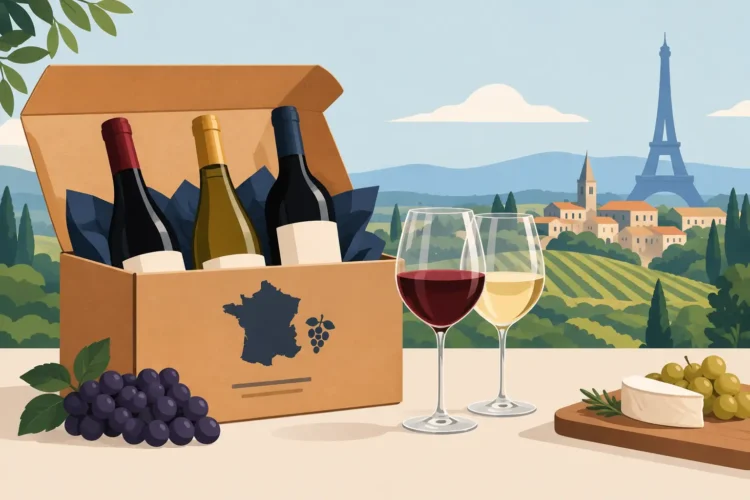
The best wine club UK drinkers can join is not simply a recurring box of bottles. It is a useful shortcut between a Tuesday-night pasta supper and a bright, peppery Côtes du Rhône you would not have found on a supermarket shelf. It should make buying wine feel more personal, more interesting and, crucially, less of a gamble.
French wine has plenty to offer beyond famous labels and familiar regions, but the choice can be bewildering. A good club introduces you to growers, grapes and appellations at a comfortable pace, with enough context to help you learn what you genuinely enjoy. There is no need to memorise every village in Burgundy or pretend you can spot a grand cru blind. Bonjour, curiosity is more than enough.
What should a wine club UK membership actually do?
A wine club should save you time without taking away your choice. That balance matters. Some people love the surprise of opening a case selected by a merchant; others want a dependable supply of their favourite Provence rosé, Loire Sauvignon Blanc or juicy Languedoc red. The most useful model leaves room for both.
Look for a club that gives you a clear saving on bottles or cases, while letting you decide how often you order. A monthly delivery sounds appealing until the wine rack is already full or a holiday changes your plans. Flexibility to pause, skip or change the quantity is not a minor detail – it is what makes a wine club fit real life rather than create another subscription to manage.
The wines themselves should also earn their place. A case that is cheap because it is built around anonymous, heavily branded bottles is not much of a discovery service. A thoughtful selection tells you who made the wine, where it comes from and what it will taste like. That gives every bottle a story, but more importantly, it gives you a reason to buy it again if you love it.
The pleasure of buying by producer, not just price
Price matters, of course. But it is a poor substitute for character. Two bottles marked simply as French red can be completely different: one may be a silky Pinot Noir from Burgundy, the other a warm, dark-fruited blend from the southern Rhône. Both may be delicious, but they suit different meals, moods and drinkers.
Producer-led buying helps make sense of that difference. Instead of treating wine as a generic product, it puts the vineyard and the person farming it back in the picture. You start to notice that you enjoy the herbal lift of southern French Grenache, the saline edge of a Muscadet with oysters, or the gentle spice that Syrah brings to a roast lamb dinner.
This is where an independent merchant can be especially useful. Their selection is usually smaller than a supermarket’s, but it is curated with a point of view. Rather than scrolling through hundreds of near-identical offers, you can browse by region, grape, appellation or style, then ask for a recommendation when the occasion calls for something specific.
A good French wine club teaches without lecturing
Wine language can become needlessly complicated. Terms such as biodynamic, HVE3 and no added sulphites are useful, but only if they help you choose a bottle with confidence.
HVE, or Haute Valeur Environnementale, is a French environmental certification that considers factors including biodiversity, water use and the careful management of vineyard inputs. HVE Level 3 is the highest level. Organic wines are made from grapes grown without synthetic herbicides, pesticides or fertilisers, while biodynamic farming takes a broader, whole-farm approach based on natural cycles and soil health.
None of these labels automatically guarantees that you will love a wine. A natural wine can be fresh and thrilling, but it can also be deliberately wild in style. A classic conventional producer may make a beautifully balanced bottle with scrupulous vineyard practices. The helpful question is not, “Which badge is best?” It is, “What does this producer do, and what sort of wine do I enjoy drinking?”
A club should explain that in plain English. Perhaps a crisp organic Picpoul is ideal for grilled fish, while a low-sulphur Beaujolais works beautifully with charcuterie and a casual Friday supper. These are practical details, not exam questions.
Why sulphites deserve a little perspective
Sulphur dioxide has been used in winemaking for centuries to protect wine from oxidation and spoilage. Most wines contain some sulphites, including many organic wines. “No added sulphites” means none were introduced during winemaking, though tiny naturally occurring amounts can still be present.
For some drinkers, low-intervention wines are an exciting route into more expressive, less polished styles. For others, a carefully made wine with modest sulphur additions offers more consistency. There is room for both on the table. The key is transparency from the merchant and producer, not a blanket claim that one approach is always superior.
Build a case around the way you eat
The easiest way to make a club delivery useful is to think beyond colour. Rather than ordering six unrelated bottles, create a small home selection that covers the meals and moments you actually have.
A lively white from the Loire is handy for fish, salads and goat’s cheese. A textured white Burgundy or Rhône blend can handle roast chicken, creamy sauces and richer vegetarian dishes. For reds, keep one lighter bottle – perhaps Pinot Noir, Gamay or fresh Cabernet Franc – alongside a fuller southern French red for slow-cooked beef, lamb or a proper Sunday roast. Add a bottle of sparkling Crémant for birthdays, guests or the welcome discovery that it is somehow already Friday.
Rosé deserves a place beyond summer, too. A dry Provençal style is excellent with Mediterranean food, but a more substantial rosé can work with grilled vegetables, spiced prawns and even a midweek pizza. Wine is more versatile when you stop treating it as a special-occasion purchase.
Mixed cases are particularly useful here. They let you try several styles without committing to six bottles of the same wine, and they reveal patterns in your taste quickly. If you finish every mineral white first but leave the oaky bottles until last, you have learned something valuable for the next order.
Savings are welcome, but value is more than a discount
A wine club should offer a genuine benefit, whether that is member pricing, mixed-case savings or a quantity discount when you buy six bottles. Yet the best value is not always the lowest price per bottle. It is receiving wines you are pleased to open, supported by enough information to serve them well.
Consider delivery, too. Next-day service can be a lifesaver when friends announce they are coming for dinner, but it is worth checking the qualifying order value and delivery terms before relying on it. If you are buying for a party or a gift, order ahead when you can. Good wine is worth planning for, even when the post is quick.
At Wine Affairs, the useful part of club-style buying is the freedom to combine savings with discovery. You can choose individual bottles, mix a case by region or grape, or ask for guidance through the AI Sommelier or WhatsApp when you need a human steer. That means a case can be built around a menu, a budget or simply a wish to drink more sustainably farmed French wine.
Choosing the right wine club UK option for you
Before joining, ask a few straightforward questions. Can you alter the frequency or skip a delivery? Are the producers and farming methods clearly described? Is there a good spread of regions and styles, rather than the same crowd-pleasing wines repeated each month? And can you get advice if a bottle or grape is unfamiliar?
There is no single right answer. A surprise-led subscription is brilliant for an adventurous drinker who wants a regular nudge to try something new. A flexible membership with member savings may suit a household that already knows what it likes but wants better value and reliable recommendations. Gift buyers may care most about presentation and delivery timing, while environmentally minded drinkers may prioritise organic, biodynamic or HVE-certified estates.
The right club should never make you feel that your palate is inadequate. Whether your favourite bottle is a fragrant Alsace Riesling, a bold Bordeaux or an uncomplicated glass of rosé after work, your taste is a useful starting point. Tell your merchant what you have enjoyed, what you are cooking and how much you want to spend. The next bottle can do the rest of the talking.