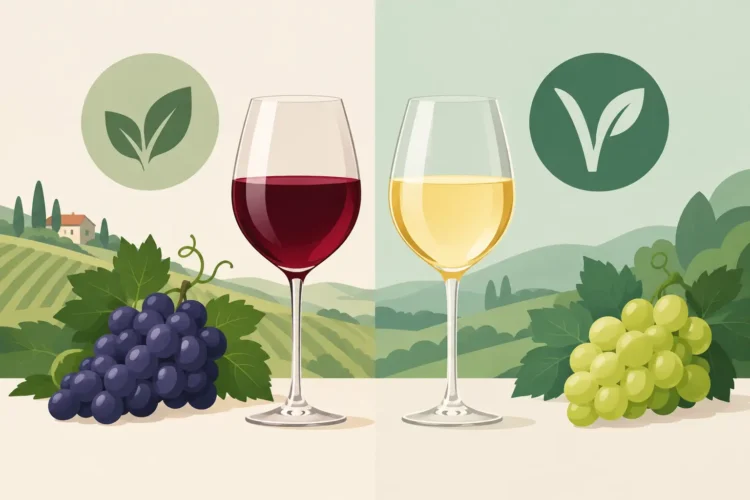
A bottle can be organic without being vegan, and vegan without being organic. That small but crucial distinction is why organic versus vegan wine can feel confusing when you are choosing for the table, a gift or a mixed case. One term is mainly about how the grapes are grown; the other is about what may happen to the wine after harvest.
The encouraging news is that neither choice needs to mean compromising on pleasure. France produces brilliant, characterful wines under both umbrellas, from crisp Loire whites to generous Languedoc reds. The useful question is not which label is ‘better’, but which practices matter most to you.
Organic versus vegan wine: two different questions
Organic wine starts in the vineyard. It is made from grapes grown without synthetic herbicides, pesticides or artificial fertilisers, following recognised organic standards. Growers instead rely on approaches such as cover crops, compost, encouraging biodiversity and careful canopy management to keep vines healthy.
Vegan wine is about the cellar. Most wine begins as fermented grape juice and is naturally vegan at that stage. However, some producers use animal-derived products during fining, a process that removes suspended particles and can make a wine appear brighter or softer. A vegan wine has not used those animal-derived fining agents.
So, organic asks, ‘How were the grapes farmed?’ Vegan asks, ‘Were animal products used in making the finished wine?’ They can overlap beautifully, but one does not guarantee the other.
What makes a wine organic?
Organic viticulture is a long-term farming commitment, not simply a decision made at bottling. In conventional vineyards, synthetic treatments can be used to control weeds, pests and disease. Organic growers work with stricter permitted inputs and put more emphasis on soil health and natural balance.
That does not mean organic vineyards are left entirely untreated. Grapevines are vulnerable to fungal diseases, particularly in wet seasons, and organic growers may use approved treatments such as sulphur and copper within regulated limits. It is skilled, hands-on work: watching the weather, walking the rows and acting early rather than reaching automatically for a broad chemical solution.
For shoppers, recognised organic certification is the clearest reassurance. It means the producer has been inspected against a defined standard rather than simply using a vague green claim. You may also see phrases such as ‘made with organically grown grapes’, although the exact wording and certification shown can vary by market and producer.
Organic farming can support healthier vineyard soils, more plant and insect life, and lower reliance on synthetic chemicals. Yet it is not a simple quality badge. An organic wine can be light or powerful, polished or wild, inexpensive or rare. The producer, site, vintage and winemaking choices still shape what is in your glass.
Organic does not automatically mean low sulphites
This is one of the most persistent myths. Sulphites occur naturally during fermentation, and many winemakers add a measured amount to protect wine from oxidation and spoilage. Organic wine rules limit added sulphites more tightly than conventional standards, but organic bottles may still contain them.
A wine labelled ‘no added sulphites’ is a separate category. It means the winemaker has not added sulphur dioxide, though naturally occurring sulphites remain. These wines can be wonderfully vivid and expressive, but they often need especially careful storage and can change more quickly once opened. Low intervention is a style choice as well as a philosophy, not a promise that every bottle will taste the same.
What makes a wine vegan?
Fining is often the missing piece of the puzzle. After fermentation, a wine may look cloudy because tiny particles of yeast, grape solids, tannins or proteins remain suspended in it. To clarify it, a winemaker can leave it to settle naturally, filter it, or use a fining agent that binds to these particles so they can be removed.
Traditional fining agents can include egg white, milk protein known as casein, gelatine and isinglass, which comes from fish. These substances are generally removed with the sediment, so they are not intended to remain in the finished wine. Still, they are not compatible with a vegan production standard.
Vegan-friendly alternatives include bentonite, a natural clay, pea or potato protein, and plant-based preparations. Some winemakers choose not to fine at all. An unfined wine may have a slight haze or deposit, especially in a young white, but that is not a fault. It can simply reflect a gentler approach in the cellar.
A wine is not necessarily vegan just because it is labelled natural, biodynamic or organic. Equally, a conventional wine can be entirely vegan if no animal-derived fining agent has been used. If vegan status is essential, look for a clear vegan declaration on the bottle or product information rather than making assumptions from its broader environmental credentials.
Where biodynamic and natural wines fit
Biodynamic wines take organic farming further. The vineyard is treated as a living ecosystem, with specific preparations, attention to biodiversity and a farming calendar that may follow lunar and seasonal rhythms. For many growers, it is a practical way of building resilient soils and expressive fruit. Biodynamic certification usually includes organic requirements, but it does not, by itself, confirm that the finished wine is vegan.
Natural wine is less neatly defined. It generally describes wines from thoughtfully farmed grapes, often organic or biodynamic, made with minimal additions and intervention. But there is no single universal legal definition. Some natural wines are vegan, some are not; some contain no added sulphites, while others use a little for stability.
The lesson is simple: treat these terms as useful signposts, not interchangeable labels. A good merchant should be able to tell you what each producer actually does in the vineyard and cellar.
How to choose the right bottle
Start with the priority behind your purchase. If reducing synthetic inputs in agriculture is your main concern, seek certified organic wines and learn about the grower’s approach to the vineyard. If avoiding animal products is non-negotiable, choose a clearly marked vegan wine. If both matter, look for a bottle carrying both credentials.
Then choose as you normally would: by flavour, food and occasion. A vegan Loire Sauvignon Blanc can still be racy and citrus-led; an organic Rhône red can still be peppery, rich and built for a slow-cooked supper. The ethical detail narrows the field, but it should not replace the joy of finding a wine you genuinely want to drink.
For a relaxed dinner, an organic and vegan Côtes du Rhône offers an easy route to ripe dark fruit and savoury spice. For seafood or a vegetarian tart, a bright vegan white from Alsace or the Loire can be a brilliant match. If you are buying for someone else, clear certification is particularly useful, as it takes the guesswork out of a thoughtful gift.
At Wine Affairs, the best starting point is to use sustainability information alongside region, grape variety and style. Bonjour, tell us whether you fancy something crisp, textured, juicy or celebratory, and the choice becomes far more enjoyable than decoding labels alone.
The bottle that suits you best may be organic, vegan, both or neither. What matters is that the label gives you enough information to choose with confidence, while the wine gives you a reason to pour another glass.