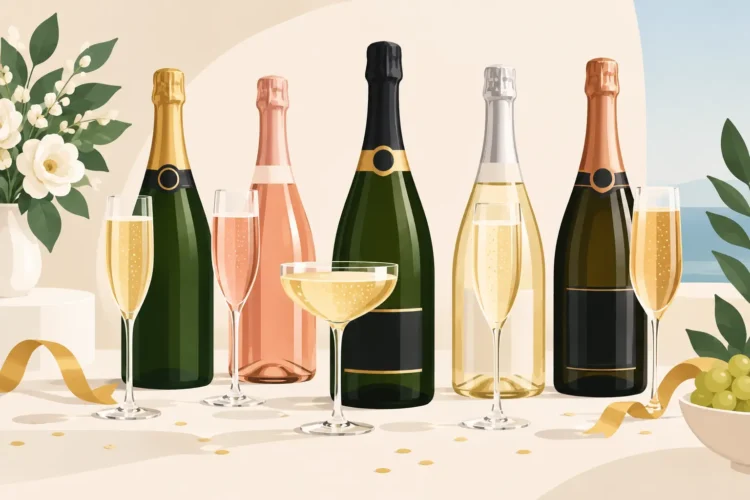
A bottle that makes roast chicken feel like an occasion, keeps up with salty crisps, or arrives at a birthday looking suitably joyful is doing more than providing bubbles. The best sparkling wines have freshness, balance and a sense of place – and they need not all be Champagne. France offers brilliant fizz at several price points, from serious Crémant to gently sweet, low-alcohol specialities.
What makes a sparkling wine worth choosing?
A good sparkling wine is not simply one with plenty of foam. Look for lively acidity, which keeps each sip refreshing, and a mousse – the texture of the bubbles – that feels fine rather than aggressively fizzy. The best examples have flavour beneath the sparkle: citrus, apple, pear, white flowers, brioche, red berries or a lightly nutty savouriness, depending on the style.
How the wine is made matters. Traditional-method wines undergo their second fermentation in the bottle, as Champagne does, and often show more complexity and a creamier texture. Tank-method wines are usually fruitier and more direct. Then there are ancestral-method wines, often called pét-nat, which can be delightfully characterful but a little less predictable.
There is no single winner for every table. A bone-dry Blanc de Blancs can be perfect with oysters and less successful with a rich pudding. A softly sweet Clairette de Die may be exactly right for a sunny lunch, but not for a formal steak supper. Start with the occasion, the food and the drinkers around the table.
10 best sparkling wines to know from France
1. Non-vintage Champagne
Non-vintage Champagne is the benchmark for celebratory fizz because it combines brightness with depth. Producers blend several vintages to create a consistent house style, often based on Chardonnay, Pinot Noir and Meunier. Expect lemon, apple, toast and pastry notes, with a dry, lingering finish. It is a dependable choice for a landmark birthday, engagement or dinner where the bottle itself should feel special.
2. Grower Champagne
Grower Champagne comes from estates that farm their own vineyards and make their own wine, rather than relying chiefly on bought-in grapes. That can mean a more distinctive expression of a particular village or parcel. Styles vary greatly, so this is a rewarding category for curious drinkers who enjoy producer stories, vineyard character and a little less predictability than a familiar grand marque.
3. Blanc de Blancs Champagne
Blanc de Blancs means white from white grapes, usually Chardonnay in Champagne. It tends to be elegant, taut and citrus-led when young, developing hazelnut, butter and toast with bottle age. Choose it for seafood, sushi, goat’s cheese or as an aperitif before a dinner that needs a crisp, polished start.
4. Rosé Champagne
Rosé Champagne brings red-fruit charm to the precision of traditional-method fizz. Depending on the producer, it may be made by blending still red wine into white base wine or by allowing brief skin contact with dark grapes. Look for wild strawberry, raspberry, rose petal and spice. It works beautifully with salmon, duck, charcuterie and a celebratory lunch where a white sparkling wine might feel too restrained.
5. Crémant de Bourgogne
For many households, Crémant de Bourgogne is one of the best-value alternatives to Champagne. It is made by the same traditional method and commonly uses Chardonnay and Pinot Noir, so the family resemblance is real. Burgundy’s version can offer orchard fruit, citrus and biscuit notes, often with generous texture. It is an excellent all-rounder for a drinks reception or a bottle to keep chilled for spontaneous guests.
6. Crémant d’Alsace
Crémant d’Alsace is lively, aromatic and often wonderfully approachable. Pinot Blanc, Riesling, Auxerrois, Chardonnay and Pinot Noir may all play a part, bringing flavours from green apple and lemon to peach and white blossom. Its freshness makes it a natural match for light canapés, Asian-inspired dishes and salty snacks. Rosé versions, generally Pinot Noir-based, are particularly useful for summer gatherings.
7. Crémant de Loire
The Loire produces sparkling wines with serious character and an appealingly cool, mineral edge. Chenin Blanc is an important grape here, offering apple, quince, honey and sometimes a subtle woolly complexity as the wine develops. Crémant de Loire is worth seeking out when you want a drier, more structured style for food, especially roast poultry, fish pie or creamy cheeses.
8. Vouvray Pétillant
Vouvray Pétillant is another expression of Loire Chenin Blanc, traditionally made and often full of apple, pear, quince and gentle honeyed notes. It can have a softer, rounder feel than the sharpest Crémant while retaining lively acidity. Serve it with pork, spiced dishes or a cheese board. If you enjoy white wines with real texture, this is a sparkling style to remember.
9. Clairette de Die
From the Drôme in south-east France, Clairette de Die offers a very different kind of pleasure. It is aromatic, lightly sparkling and usually noticeably sweeter, with Muscat bringing grapey, peachy and floral flavours. Its lower alcohol makes it relaxed rather than heavy. Think fruit tarts, brunch, afternoon gatherings or an easy-going aperitif for friends who find very dry fizz a little severe.
10. Pétillant Naturel
Pét-nat, short for pétillant naturel, is made by bottling wine before its first fermentation has finished, trapping carbon dioxide naturally. It can be cloudy, crown-capped and cheerfully unconventional, with flavours that range from tart citrus to bruised apple, herbs and wild strawberry. It suits drinkers who enjoy low-intervention wines, but buy from a careful producer and chill it well. Sediment is normal, and each bottle can have its own personality.
How to choose the best sparkling wine for your occasion
For an aperitif, choose a dry wine with bright acidity: Crémant d’Alsace, Blanc de Blancs or a fresh non-vintage Champagne are sound choices. With a meal, allow the food to lead. Chardonnay-led styles flatter shellfish and delicate fish, while rosé sparkling wines are more at home beside richer poultry, cured meats and salmon.
For gifts, provenance is often as valuable as a famous label. A grower Champagne or a carefully made Crémant from a recognised French region gives the recipient something to talk about as well as drink. If you are ordering for a party, it is sensible to mix styles: a dry white for the first glass, a rosé for food, and perhaps a sweeter bottle for pudding or guests with different tastes.
Do not assume the most expensive bottle is automatically the best fit. Champagne carries the cost of its region, production method and long ageing requirements. Those things can deliver extraordinary quality, but a well-chosen Crémant may be the smarter purchase when you need several bottles. Mixed cases are also a useful way to compare regions without committing to six of the same wine.
Sparkling wine, served properly
Chill most sparkling wines to around 8-10°C. Too cold and the aromas disappear; too warm and the bubbles seem coarse. A wine fridge is useful, but a few hours in the refrigerator is usually enough. Open the bottle slowly, keeping a thumb on the cork and turning the bottle rather than the cork. The quiet sigh is preferable to a dramatic pop and preserves more of the wine.
A flute shows off a stream of bubbles, but a tulip-shaped sparkling wine glass is often better for tasting because it gives aromas room to gather. If you are enjoying a serious vintage Champagne, a regular white-wine glass can reveal even more texture and detail.
A note on sustainable fizz
Sparkling wine is an especially good place to look beyond the label. Vineyard farming has a direct effect on the landscape, from biodiversity between the rows to how growers manage pests and soil health. Organic, biodynamic and HVE-certified producers follow different approaches, but all can offer useful clues about a domaine’s priorities.
These terms are not shortcuts to flavour. An organic wine can still be rich or lean, dry or sweet, conventional-looking or wild. They are, however, a helpful starting point for drinkers who want their bottle to reflect care in the vineyard as well as pleasure in the glass. At Wine Affairs, filtering by region, farming approach and grape variety makes that exploration far less daunting.
The most memorable bottle is usually the one that suits the moment: a serious Champagne shared slowly, a bright Crémant poured generously, or a slightly cloudy pét-nat that starts a conversation. Bonjour to choosing fizz with a little more intention – and enjoying every last bubble.