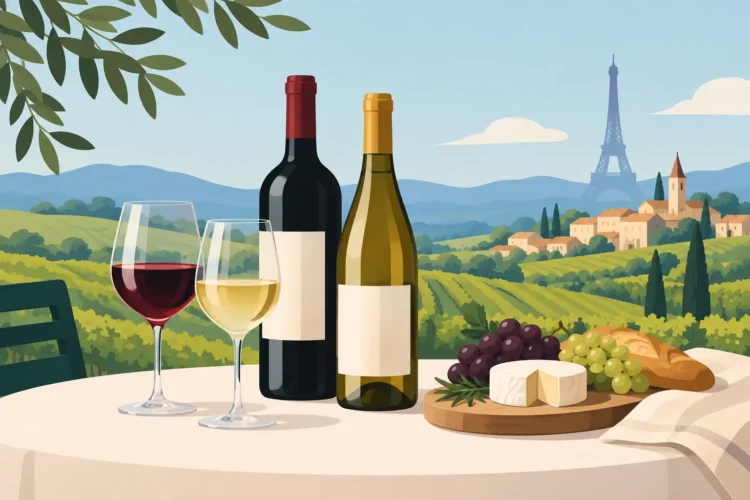
A bottle of French wine can tell you a great deal before the cork is pulled: where the grapes grew, who made it, how the vineyard was farmed and, often, what it will taste like with dinner. Yet the label can also feel like a test in another language. French wines become much more approachable once you stop trying to memorise every château and begin with a few useful clues.
The best place to start is not prestige or price. Start with the occasion. Are you opening a fresh white with Friday fish and chips, a lighter red for a midweek pasta, or something more structured for roast lamb? A good French bottle should feel like a pleasure, not homework.
French wines begin with place
France is organised around the idea of terroir: the combination of soil, climate, landscape and local know-how that gives a wine its sense of place. This is why French labels usually lead with a region or appellation rather than a grape variety. A Burgundy may be Chardonnay or Pinot Noir, but the name Burgundy tells you more about where it comes from than the grape alone.
Appellations are geographic areas with rules about permitted grapes, yields and winemaking. Those rules can be helpful signposts, though they are not a guarantee that one wine will suit every palate. A modest appellation made by a thoughtful grower can be far more exciting than a famous name made without much care.
For everyday buying, think of French regions as flavour families rather than a map to master. The Loire often offers brightness and freshness. The Rhône tends towards warmth, spice and generosity. Burgundy is celebrated for fine-boned Chardonnay and Pinot Noir. Bordeaux brings structure, blackcurrant fruit and classic food-friendly reds, while Provence is the natural home of pale, dry rosé.
Find your French wine style
For crisp whites and seafood suppers
The Loire is a brilliant first stop. Sauvignon Blanc from Sancerre or Touraine can bring citrus, herbs and a clean, stony edge that works beautifully with goat’s cheese, prawns and grilled fish. Muscadet, made near the Atlantic, is lighter still: dry, saline and particularly good with oysters or simply cooked white fish.
For a rounder style, look to Chardonnay from Burgundy, the Mâconnais or the Jura. Not every Chardonnay is buttery or heavily oaked. Many have bright apple and lemon fruit, a gentle creaminess and enough freshness to pair with roast chicken, mushroom dishes or a good wedge of Comté.
Alsace is a rewarding choice when aromatic whites are called for. Riesling can be dry and racy, while Pinot Gris often feels richer and more textured. Both are excellent alongside spicy food, where a high-alcohol red can quickly become overpowering.
For reds with character, not heaviness
If you enjoy red wine but want something lighter than a blockbuster, Pinot Noir is a natural answer. Burgundy has the famous examples, but excellent, more accessible Pinot can also come from the Loire, Alsace and Languedoc-Roussillon. Expect red cherry, raspberry, savoury notes and a silky feel rather than dense tannin.
Beaujolais deserves a place on every relaxed dinner table, too. Made from Gamay, it can be juicy, floral and lightly chilled – a wonderfully versatile choice with charcuterie, sausages, pizza or Sunday leftovers. Fleurie and Morgon offer more depth, while straightforward Beaujolais is often a cheerful, dependable bottle.
For fuller reds, the Rhône offers a clear route in. Côtes du Rhône commonly combines Grenache, Syrah and Mourvèdre, giving ripe berry fruit, pepper and Mediterranean herbs. It is a natural partner for lamb, aubergine, barbecue food and slow-cooked dishes. Bordeaux, particularly blends based on Merlot and Cabernet Sauvignon, tends to be more structured. Choose it for steak, hard cheeses or a meal where the wine has a proper role to play.
For rosé and sparkling moments
Provence rosé is popular for good reason: the best examples are dry, pale, refreshing and more serious at the table than their easy-drinking reputation suggests. They suit salads, grilled vegetables, seafood and sunny afternoons, but a chilled bottle also makes a smart aperitif when guests arrive.
French sparkling wine is not limited to Champagne. Crémant from Burgundy, the Loire, Alsace or Jura can offer lively bubbles and real character at a more everyday price. It is worth considering for birthdays, brunches and gifts, especially when you would rather spend on a thoughtful producer than a famous label.
Let the label help, not intimidate
A French label has a few details worth noticing. The producer name matters because farming and cellar choices shape the finished wine. The vintage tells you the year the grapes were harvested, although its importance varies: it can be crucial in some classic regions and less decisive for wines made in a consistently sunny area.
You may also see terms such as “vieilles vignes” for old vines, or “mis en bouteille au domaine”, meaning bottled at the estate. These can be useful clues, but they are not badges of automatic quality. The most useful question remains simple: does this producer make the style of wine you enjoy?
Grape varieties are increasingly shown on labels, particularly from the south of France, where regional IGP wines can give winemakers more freedom than stricter appellation rules. This is excellent news for curious drinkers. A Languedoc Syrah, a Corsican Vermentino or a southern French Cabernet Franc can be delicious, distinctive and good value without requiring a lesson in classification first.
Greener French wine is about more than a logo
For many drinkers, how a wine is made matters as much as what it tastes like. France has a growing number of producers farming organically, biodynamically or under HVE certification. These terms overlap in spirit but mean different things.
Organic wine is made from grapes grown without synthetic herbicides, pesticides or fertilisers. Biodynamic farming goes further, treating the vineyard as a living ecosystem and following a more holistic set of practices. Some growers find it brings vitality and balance to their vineyards; others prefer organic methods without the biodynamic framework. Both approaches can produce excellent wine, but neither should replace tasting and producer knowledge.
HVE, or Haute Valeur Environnementale, is a French environmental certification that assesses biodiversity, plant protection, fertiliser management and water use. HVE3 is its highest level. It is not the same as organic certification, but it can be a meaningful indication that a vineyard is taking measurable steps to reduce its environmental impact.
Natural wine is less tightly defined. It usually refers to organically or biodynamically farmed grapes, minimal cellar intervention and little or no added sulphur. These wines can be vivid and expressive, but the style is broad. Some are pristine and precise; others are deliberately cloudy, wild or unconventional. If you are sulphite-sensitive or simply curious, look for no-added-sulphite wines, while remembering that sulphites occur naturally in wine too.
Choose by meal, mood and confidence
There is no need to buy French wines one bottle at a time with fingers crossed. A mixed case is a practical way to compare regions and find favourites: perhaps a Loire white, a Provençal rosé, a Beaujolais, a Rhône red and a bottle of Crémant. You learn more from tasting across styles than from reading a dozen tasting notes.
For a dinner party, buy one step up from your usual weekday budget and choose a wine with food in mind. For a gift, a recognisable region can be reassuring, but a bottle from a small organic estate often feels more personal. For Tuesday night, seek freshness, balance and a producer you trust rather than chasing a grand appellation.
If you are unsure, describe what you normally drink, what you are eating and whether you prefer lighter or richer styles. At Wine Affairs, that can turn a confusing shelf of names into a genuinely useful recommendation. Bonjour to better bottles: the French wine worth remembering is usually the one that made supper, company or a quiet evening feel a little more considered.