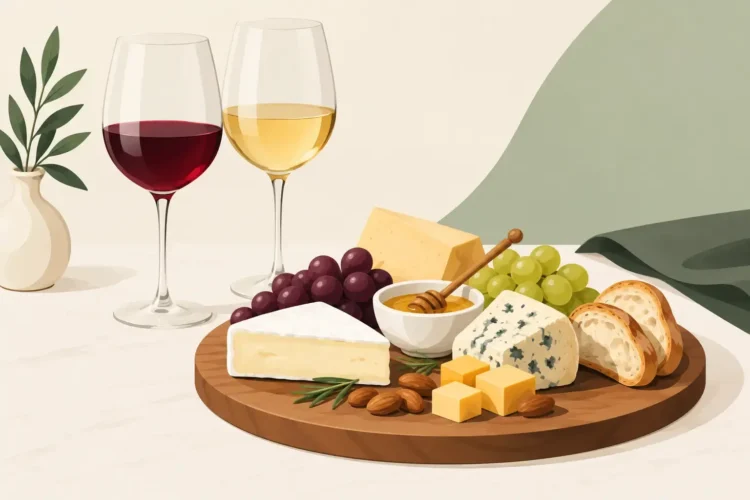
A cheese board can go from quietly brilliant to oddly bitter with one mismatched bottle. The good news is that learning to pair wine with cheese is less about memorising rules and more about noticing three things: richness, salt and acidity. Get those in balance and even a simple supper of baguette, cheese and a bottle from the fridge feels properly considered.
French wine gives you an especially useful starting point. Its range of styles, from brisk Loire whites to supple Rhône reds and gently sweet Alsace bottles, has evolved alongside some of the world’s great cheeses. Bonjour, happy coincidence.
How to pair wine with cheese: start with texture
A cheese’s texture usually matters more than its colour. Creamy cheeses need freshness to stop the pairing feeling heavy. Firm, nutty cheeses can cope with more body and oak. Washed-rind cheeses bring pungency and salt, which often call for an aromatic white rather than the powerful red people instinctively reach for.
Think of wine as either cutting through the cheese or echoing it. High acidity cuts through richness, much as a squeeze of lemon brightens butter. A round, ripe wine can echo the soft texture of a mild cheese. Neither route is wrong, but a board with several cheeses is usually easier to manage with wines that have good acidity.
Salt is equally useful. Salty cheese softens the feel of tannin and can make a red taste fruitier. That is why mature Cheddar can work so well with a juicy red, while blue cheese can make a sweet wine seem less sugary and more vivid.
The pairings worth knowing
Goat’s cheese and Loire Sauvignon Blanc
Fresh goat’s cheese has tang, chalky texture and a clean lactic flavour. Sauvignon Blanc from the Loire, particularly styles associated with Sancerre or Pouilly-Fumé, meets it with citrus, green fruit and lively acidity. The wine refreshes the palate without flattening the cheese’s delicate character.
If your goat’s cheese is baked, warm and drizzled with honey, choose a slightly fuller white instead. A dry Chenin Blanc from the Loire has enough texture for the warmth of the dish while keeping that all-important line of acidity.
Brie, Camembert and Chardonnay
Bloomy-rind cheeses are rich, mushroomy and soft at room temperature. An unoaked or lightly oaked Chardonnay is a natural fit, especially one with freshness rather than heavy vanilla sweetness. Look towards Burgundy, including Mâconnais or Chablis for a tauter style, if you want the wine to lift the cheese.
For a very ripe Camembert, a sparkling wine is a clever alternative. Traditional-method fizz has acidity, bubbles and often a subtle bready note that feels at home alongside the cheese. It is also one of the easiest ways to keep a mixed board feeling light.
Comté, Gruyère and Jura whites
Comté is a wine-lover’s cheese: firm but not dry, salty, nutty and often gently sweet. A Chardonnay from the Jura, particularly one with a savoury, complex edge, can be exceptional. The two share hazelnut, butter and alpine notes without becoming cloying.
A white Burgundy also works beautifully, especially with younger Comté. As the cheese matures and becomes more intense, move towards a fuller, more layered wine. This is a pairing where a little bottle age can add a lovely autumnal dimension.
Cheddar and fruity red wine
Mature Cheddar needs a red with fruit, freshness and moderate tannin. Think Beaujolais, made from Gamay, or a lighter Rhône red based on Grenache and Syrah. Their berry fruit and spice stand up to the cheese, while their tannins are gentle enough not to turn metallic or harsh.
Avoid an aggressively oaked, heavily tannic red with everyday Cheddar. The cheese may be bold, but it is not necessarily built for a blockbuster bottle. If you are serving a farmhouse Cheddar with chutney or pickled onions, a bright red with low tannin is even more useful because it will not fight the sharpness of the accompaniments.
Blue cheese and sweet wine
This is the classic contrast that earns its reputation. Stilton, Roquefort and other blue cheeses are salty, creamy and piercingly savoury. A sweet wine balances those flavours, while its acidity stops the combination becoming sticky. Sauternes is the famous French choice, but a late-harvest-style wine from Alsace can be equally persuasive.
The wine should be sweeter than the cheese is salty. A dry red with blue cheese can work in a specific setting, particularly with a milder blue and a very fruity, low-tannin red, but sweet wine is the safer and often more memorable route.
Washed-rind cheese and aromatic whites
Époisses, Munster and Taleggio-style cheeses can smell formidable but taste wonderfully savoury and silky. Big red wine is rarely the answer. Its tannins can amplify bitterness and make the pairing feel muddy.
Choose an aromatic white instead: Riesling, Gewürztraminer or Pinot Gris from Alsace are excellent places to start. Their perfume, ripe fruit and acidity meet the cheese’s power without trying to overpower it. A little residual sugar is welcome here, not a flaw.
Red, white or sparkling for a mixed cheese board?
If you are serving three or four cheeses, do not feel obliged to open a bottle for each. A dry sparkling wine is arguably the most adaptable choice. It brings acidity for soft cheeses, enough fruit for firmer ones and the palate-cleansing lift that makes another bite appealing.
A fresh white with some texture is the next best all-rounder. Loire Chenin Blanc, white Rhône blends and carefully chosen Chardonnay can move comfortably from goat’s cheese to Comté. For red wine lovers, pick something approachable and low in tannin – Beaujolais is a particularly dependable answer.
The board itself changes the calculation. Sweet chutney, fig jam and grapes make dry wines taste sharper, so offer those sparingly or choose a riper wine. Salami and cured ham favour reds with freshness; smoked almonds and olives make crisp whites and sparkling wine shine. Plain crackers and good bread are useful because they let the cheese and wine do the talking.
A practical way to build the board
For six people, three cheeses are plenty: one fresh or soft, one firm and one blue or washed-rind cheese if your guests enjoy stronger flavours. Serve around 75g to 100g of cheese per person if it is a starter, more if it is supper. Take cheese from the fridge around an hour before serving, though very soft cheeses may need less time in a warm kitchen.
Choose wine according to the strongest cheese, not the mildest one. A board built around goat’s cheese, Brie and Comté is easy with a Loire white or sparkling bottle. Add Stilton and you have a good reason to pour a small glass of sweet wine alongside it. Two wines can feel generous without becoming complicated.
Sustainable choices deserve the same practical thinking. Organic, biodynamic and HVE-certified wines are not a separate flavour category, and they do not need special pairing rules. What matters is the wine in the glass: its acidity, fruit, tannin and sweetness. At Wine Affairs, producer-led French wines make it easier to choose by region and style while keeping the farming behind the bottle in view.
Trust your palate, not a rigid rulebook
Some pairings are reliably delicious, but personal taste still has the final word. If you love a peppery Syrah with Brie, try it – especially if the cheese is ripe and the wine is not too tannic. If goat’s cheese and Sauvignon Blanc feel too familiar, pour a dry rosé with enough acidity and see how it changes the plate.
Taste the cheese first, then take a sip of wine, then taste them together. Notice whether the wine becomes more vibrant, whether the cheese feels creamier, or whether bitterness suddenly appears. That small experiment is far more useful than worrying about whether white must go with soft cheese and red must go with hard cheese.
Start with one cheese you already enjoy, choose a wine with freshness, and leave room for curiosity. The best pairing is the one that makes everyone reach for another piece of bread and another conversation.