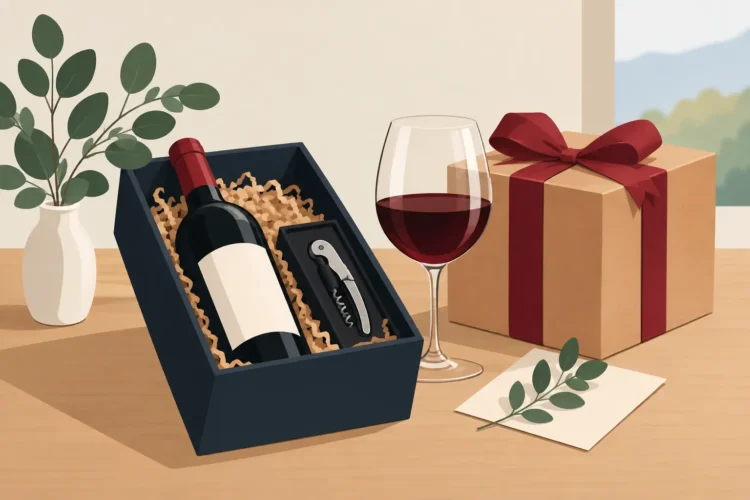
A bottle hastily taken from the supermarket shelf can feel like an afterthought. The best wine gifts feel rather different: they say you considered the person, the occasion and perhaps even the meal they will share it with. That does not mean spending a fortune or pretending to know every grand cru in Burgundy. It means choosing a wine with a story, a clear sense of place and a style the recipient will genuinely enjoy.
For a birthday, housewarming, thank-you or dinner invitation, French wine is wonderfully versatile. There is a bottle for the friend who loves a crisp aperitif, the keen cook planning Sunday lunch, and the curious drinker ready to try something beyond their usual Malbec. Add thoughtful farming and direct delivery, and giving wine becomes both easy and personal.
Start with the person, not the label
A recognisable name can be reassuring, but it is rarely the whole gift. Begin with what the recipient actually drinks. Do they order pale, dry rosé whenever the sun appears? Are they happiest with a generous red beside roast lamb? Do they usually reach for Sauvignon Blanc, or are they the sort to get excited by an unfamiliar Loire appellation?
If you are unsure, think about food and setting. A bright, mineral white makes a lovely gift for someone who enjoys fish, goat’s cheese or a relaxed pre-dinner glass. A supple red with fresh fruit and gentle tannins suits convivial weeknight cooking. For a proper celebration, sparkling wine creates an occasion before the cork is even out.
The aim is not to demonstrate encyclopaedic wine knowledge. A bottle chosen for its drinkability and character will nearly always land better than an impressive-looking wine that is too heavy, too oaky or simply not their style.
Wine gifts by occasion
For birthdays and milestones
Sparkling wine is an obvious choice, but not a lazy one. Champagne is fitting for a landmark birthday or significant achievement, particularly when the recipient enjoys classic toast, citrus and brioche notes. For something a little less expected, a Crémant from Burgundy, Alsace or the Loire offers traditional-method sparkle and a strong sense of French place, often with excellent value.
A magnum is another generous option for a birthday lunch or family gathering. Its larger format feels celebratory and is made to share. Choose a food-friendly red or a refreshing rosé rather than an overly powerful bottle, especially if you do not know the menu.
For dinner hosts
The safest host gift is one that does not demand immediate opening. A versatile white from the Loire, such as Chenin Blanc or Sauvignon Blanc, is useful to have chilled for another evening. Likewise, a balanced Rhône red can work with roast chicken, sausages, grilled vegetables or a cheeseboard without taking over the table.
If you know the menu, matching the wine is a kind gesture. Provence rosé is a natural partner for Mediterranean dishes and warm-weather lunches. Pinot Noir from Burgundy or another cool French region has the freshness for duck, mushrooms and salmon. For richer dishes, look towards the Rhône, Bordeaux or Languedoc-Roussillon, where fuller reds can bring dark fruit, spice and satisfying structure.
For a thank-you
A thank-you gift need not be grand to feel considered. One beautifully chosen bottle from a small producer is often more meaningful than a generic hamper. Look for a wine with a concise story: old vines, a family estate, organic farming or an expressive local grape.
This is where an approachable appellation can be a pleasure. A Picpoul de Pinet for a seafood-loving neighbour, an Alsace Riesling for the friend who likes aromatic whites, or a sunny Corsican rosé for a generous host all give you something specific to say when you hand it over.
Choose a bottle with values behind it
For many wine drinkers, provenance now includes how the grapes were grown. Sustainable wine gifts are not about compromising on flavour. Often, attentive farming is exactly what helps a wine express its vineyard, vintage and grape variety clearly.
HVE, short for Haute Valeur Environnementale, is a French environmental certification that considers areas such as biodiversity, plant protection and water management. HVE Level 3 is the highest level of the scheme. Organic wine comes from vineyards managed without synthetic herbicides, pesticides or fertilisers, while biodynamic growers take a broader, farm-wide approach guided by natural cycles and soil health.
These terms are useful signposts, not guarantees that every bottle will taste the same. An organic wine can be crisp and classical or wild and cloudy; a conventional estate can still farm with great care. The most useful question is whether the producer works thoughtfully and whether the wine suits the person receiving it.
Natural wine and bottles with no added sulphites may appeal to adventurous drinkers, particularly those who enjoy lighter, more textural or less polished styles. They are not automatically better, and they can be less predictable. If your recipient prefers familiar, clean-cut wines, a sustainably farmed bottle made in a more traditional style may be the wiser choice.
When one bottle is not enough
A mixed case is one of the most useful wine gifts for a household, a newly moved-in couple or someone beginning to explore French wine. It gives them several occasions rather than one, and it removes the pressure of choosing a single “perfect” bottle.
A good mixed case has a little rhythm to it: a fresh white for weekday suppers, a rosé for friends dropping by, an easy red for pizza night and a more serious bottle for a slower meal. It can also introduce regions without turning the gift into homework. A Loire white, Provence rosé, Rhône red and a bottle from Burgundy show just how varied France can be.
Cases are especially practical at Christmas, for corporate thank-yous and for families who entertain. The trade-off is that they are less tailored if you know the recipient has a firm preference. A dedicated lover of dry Riesling may appreciate three carefully chosen bottles more than six assorted wines.
How much should you spend?
Price matters, but a thoughtful gift is not defined by a grand total. Around the middle of a specialist merchant’s range, you can usually find wines with more individuality than many promotional supermarket bottles: better fruit, clearer regional character and a producer’s name worth remembering.
For a casual thank-you, choose a reliable bottle that feels a notch above everyday drinking. For a birthday or dinner party, move up to a distinctive appellation, a single-estate wine or a special format. For a major celebration, Champagne, a mature-style Bordeaux, a fine Burgundy or a carefully chosen mixed case can make sense.
It also depends on how the wine will be used. A complex, age-worthy red is exciting for an enthusiast with a cellar, but less helpful for somebody who wants to open it over a Friday supper. A wine ready to enjoy now is usually the most generous choice.
Make the gift feel personal
A short note turns a bottle into a proper present. You do not need tasting jargon. Try a simple line such as, “I thought this would be lovely with your next roast chicken,” or, “A little taste of Provence for your garden lunches.” If you chose a sustainable bottle, mention the grower’s care for the vineyard rather than presenting it as a lecture.
Presentation can stay simple too. A bottle in a gift bag, wrapped in plain paper or paired with a handwritten card has more warmth than excessive packaging. If you are sending directly, check the delivery timing and make sure an adult can receive it. Wine is a brilliant last-minute solution only when it arrives before the celebration.
If choosing still feels tricky, it is sensible to ask for guidance. Describe the person, what they usually drink, your budget and the occasion. At Wine Affairs, the AI Sommelier and a direct chat with Marc can help turn those few details into a confident choice, whether you need one bottle, a mixed case or a gift card that lets them explore for themselves.
The most memorable wine gifts are not necessarily the rarest. They are the ones opened at the right moment, shared with the right people and remembered because somebody took the time to choose well. Bonjour to that.