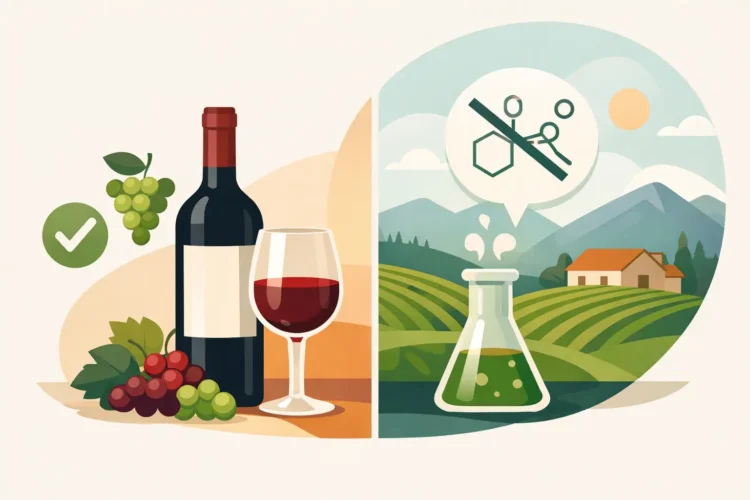
A bottle labelled wine with no added sulphites can sound like the simplest choice in the world. In reality, it tells you one very specific thing about how the wine was made – not that it contains no sulphur whatsoever, not that it will suit every palate, and not automatically that it is “better”. The good news? Once you know what the phrase means, choosing a bottle becomes much more straightforward.
For many drinkers, these wines are a brilliant route into thoughtful, low-intervention French winemaking: vivid fruit, real freshness and a clearer sense of the grower’s hand. They can also be less forgiving in the cellar and more variable from bottle to bottle. That is part of their charm, but it is worth knowing before you open one for a big dinner.
What does wine with no added sulphites mean?
Sulphites are sulphur compounds, usually discussed in wine as sulphur dioxide, or SO2. They have been used in winemaking for centuries because they protect wine from unwanted oxidation and spoilage. In practical terms, they help a white wine stay bright rather than turning brown and tired, and help preserve fresh fruit character after bottling.
The crucial distinction is between naturally occurring sulphites and added sulphites. Yeast produces small amounts of sulphites during fermentation, so wine is never truly sulphite-free. When a producer states “no added sulphites”, they mean no extra sulphur dioxide was added during winemaking or bottling.
That wording matters. A no-added-sulphites wine may still contain a small natural level of sulphites, and EU allergen labelling rules can require a sulphite declaration above certain thresholds. It is therefore not the same as a medical guarantee for anyone with a diagnosed sulphite sensitivity. If you have an allergy or have been advised to avoid sulphites, seek advice from a healthcare professional rather than relying on a wine style alone.
Why do winemakers choose not to add sulphites?
For many growers, the decision begins in the vineyard. Healthy, carefully farmed grapes arrive at the cellar with better natural balance and fewer damaged berries, reducing the need for correction later. Organic and biodynamic producers often work this way, although neither certification automatically means a wine has no added sulphites.
In the cellar, the approach demands precision. Grapes may be picked at the right moment, sorted carefully, fermented with native yeasts and handled gently. Clean equipment, careful temperature control and sensible decisions around oxygen all become especially important. This is not about doing nothing. It is about doing the right things at the right time, without using sulphur dioxide as a safety net.
Some winemakers feel that avoiding additions lets fruit, soil and vintage speak more clearly. A Loire Chenin Blanc may show waxy apple, quince and stony freshness; a Beaujolais Gamay may feel juicy, floral and gloriously light on its feet. The best examples taste alive rather than stripped back.
How does wine with no added sulphites taste?
There is no single flavour profile. A no-added-sulphites red can be deep, savoury and structured; a white can be crisp and precise; a pétillant naturel can be joyful, cloudy and wildly refreshing. The grape variety, region, vintage and producer matter far more than one line on the label.
That said, these wines often feel particularly expressive. Reds may show brighter berry fruit and softer tannins, while whites can have a more textured, orchard-fruit character. You may also notice aromas that are less polished than a conventional supermarket wine: wild herbs, fresh cider apple, yoghurt-like creaminess or a gentle farmyard note. Sometimes that is a compelling part of the wine’s personality. Sometimes it signals a bottle that needs air, a little chilling, or simply is not the style for you.
The trade-off is consistency. Sulphur dioxide is a useful preservative, and leaving it out gives a wine less protection during transport and storage. A conscientious producer can make wonderfully stable wines without additions, but these bottles reward good handling more than most.
A quick word on “funky” wines
No-added-sulphites wine is often grouped together with natural wine, but the terms are not interchangeable. Natural wine has no single legal definition. One producer may make a pristine, classic-tasting Mâcon with no added sulphites; another may make a cloudy, highly aromatic orange wine with a more experimental edge.
If you enjoy clean, recognisable French styles, do not assume this category is too wild for you. Equally, if you actively seek a little unpredictability and character, do not assume every bottle will be cloudy or eccentric. Ask about the producer and the wine itself, rather than buying only by category.
Are sulphites the cause of wine headaches?
This is one of wine’s most persistent myths. Sulphites can trigger reactions in a small number of people, particularly some people with asthma, and that should be taken seriously. But for most drinkers, there is no clear reason to blame sulphites alone for a headache after wine.
Alcohol, dehydration, poor sleep, drinking on an empty stomach and simply drinking more than intended are more likely explanations. Red wines also contain tannins, histamine and other compounds that can affect individuals differently. A wine with no added sulphites is not a hangover-proof wine.
The most helpful approach is to pay attention to your own experience. Try one glass alongside food, drink water, and see how you feel rather than making a grand claim after one evening. Choosing wines you genuinely enjoy, and drinking them moderately, remains the best place to start.
How to choose a good bottle
Producer matters enormously. Look for growers with strong vineyard practice, careful harvesting and a clear philosophy in the cellar. Regions with a lively community of organic and low-intervention estates – including the Loire, Beaujolais, Languedoc, Jura, Alsace and parts of the Rhône – offer plenty to explore, but fine examples come from across France.
For an easy first bottle, a youthful, fruit-led red is often a friendly entry point. Gamay, Cinsault, Grenache and Pinot Noir can be particularly appealing when made with a light touch. For white wine, seek wines with naturally generous fruit and good acidity, such as Chenin Blanc, Muscat, Pinot Gris or southern Rhône blends. A sparkling pét-nat can be fun for a party, though it is usually best for drinkers comfortable with a little cloudiness and variation.
If you are serving food, keep the pairing relaxed. Juicy reds work beautifully with charcuterie, roast chicken, sausages and mushroom dishes. Textured whites suit grilled fish, creamy cheeses and vegetable-led meals. Serve reds slightly cooler than a centrally heated room – around 14-16°C is often a good starting point – and whites properly chilled, but not icy.
At Wine Affairs, the useful question is not just “Do you have wine with no added sulphites?” but “What do you like to drink?” Tell us whether you want a silky red for Friday night, a fresh white for fish, or something adventurous for friends, and the recommendation can be matched to your taste rather than a fashionable label claim.
Storage and serving make a real difference
Buy from a merchant that stores wine carefully and turns stock regularly. Once the bottle arrives, keep it somewhere cool, dark and away from radiators or sunny windowsills. A wine rack in a warm kitchen may look inviting, but it is not ideal for any wine, especially one made with minimal protection.
Most no-added-sulphites wines are made to enjoy while young. Unless the producer specifically suggests ageing, think in terms of months or a couple of years rather than laying down a case for a decade. After opening, reseal the bottle and refrigerate it. Many reds will be at their best on day one, while some whites and lighter reds can remain lovely the following day.
Do not be afraid to give a bottle a little air. If it seems tight, lightly fizzy when it should not be, or unusually aromatic straight from the bottle, pour a glass and wait ten minutes. A gentle swirl can make all the difference. If the wine smells strongly of vinegar, nail varnish remover or damp cardboard and does not improve, it may be faulty – good merchants will want to know.
Choose curiosity, not a label rule
Wine with no added sulphites is neither a virtue badge nor a warning sign. It is one thoughtful winemaking choice, best understood alongside the grower, the vineyard and the style in the bottle. Start with a producer-led French wine that sounds delicious to you, serve it well, and let your own palate decide where to go next.