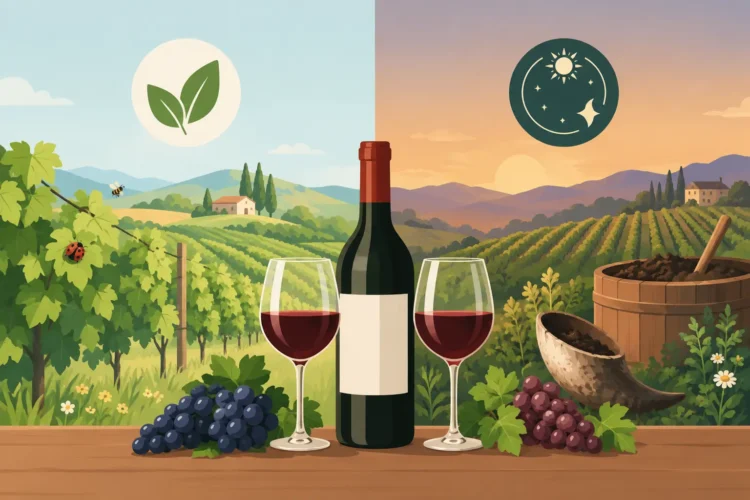
A bottle marked organic may come from a vineyard with healthier soils and fewer synthetic inputs. A biodynamic bottle may come from that same kind of vineyard, but with an extra layer of farming philosophy, preparation and attention to the whole estate. In the organic vs biodynamic wine conversation, the key question is not which is automatically better. It is what the grower does, what the certification actually guarantees, and – most importantly – whether you enjoy what is in your glass.
For curious wine drinkers, these terms can feel like a maze of green labels, French regulations and lively opinions. Bonjour, let’s make it straightforward.
Organic vs biodynamic wine: the essential difference
Organic wine starts with a clear principle: avoid synthetic herbicides, pesticides and fertilisers in the vineyard. Growers instead rely on approaches such as cover crops, compost, manual work and carefully selected treatments to manage weeds, pests and disease. In the EU, a certified organic wine must follow rules for both grape growing and winemaking, including limits on certain additions and sulphur dioxide.
Biodynamic wine includes organic farming but takes it further. It treats the vineyard as a self-sustaining living system, where soil, vines, animals, plants and people are connected. Biodynamic growers often make compost preparations, encourage biodiversity around the vines, and time some vineyard tasks according to lunar and planetary calendars.
That last point is where people tend to raise an eyebrow. You do not have to be convinced by every biodynamic principle to appreciate the results. What matters in practical terms is that many biodynamic estates work intensely in their vineyards, build soil life and aim for naturally balanced grapes. Better-balanced fruit can mean less need for correction in the cellar.
What organic certification means on a wine label
Organic certification gives shoppers a useful baseline. It tells you the producer has been independently checked against defined standards, rather than simply using a vague environmental claim.
In France, look for the familiar green EU organic leaf and, often, the AB logo for Agriculture Biologique. These indicate that the grapes and winemaking meet EU organic requirements. The rules restrict synthetic chemical treatments and set lower maximum sulphite levels than conventional wine, although organic wine is not necessarily sulphite-free.
This distinction matters. Sulphur dioxide, often shortened to sulphites, is used to protect wine from oxidation and unwanted microbial activity. It has been used in winemaking for centuries and occurs naturally in small amounts during fermentation. Many organic producers use it sparingly because it helps a wine travel well and arrive in good condition. A wine labelled organic can therefore still contain added sulphites.
Organic farming is not effortless farming. In a dry southern region, avoiding synthetic sprays may be relatively manageable. In a wet, humid vintage in Burgundy, the Loire or Bordeaux, fungal pressure can be relentless. Growers must be observant, quick to act and prepared to accept lower yields in difficult years. That commitment is one reason organic wine can feel especially expressive of its place and season.
How biodynamic farming goes further
Biodynamic vineyards follow organic rules as a starting point, then use additional methods intended to strengthen the farm’s natural resilience. Composting, herbal teas, flowering plants between vine rows and habitats for insects are common sights. Some estates keep animals or work with neighbouring farms to create a more complete agricultural ecosystem.
Preparations made from ingredients such as yarrow, nettle, chamomile and silica are applied in tiny quantities to compost or vineyard soils. Advocates see these as a way to stimulate soil vitality and vine health. Critics may question the scientific basis of particular preparations or lunar timing, and that is a fair discussion to have. The more visible benefits – richer biodiversity, lower reliance on synthetic inputs and close vineyard observation – are easier to recognise.
Two respected organisations commonly associated with biodynamic wine are Demeter and Biodyvin. Their symbols show that a producer has met biodynamic standards, with audits and rules that go beyond organic certification. Not every thoughtful biodynamic grower carries one of these labels, however. Certification costs money and paperwork takes time, particularly for small family estates.
Equally, a biodynamic label is not a guarantee that every bottle will suit your taste. Winemaking choices still matter: ripeness, oak, extraction, sweetness and sulphur use all shape the final wine.
Does biodynamic wine taste different?
Sometimes, but not in one predictable way. There is no single biodynamic flavour. A crisp Alsace Riesling, a savoury Loire Cabernet Franc and a perfumed Rhône Syrah can all be biodynamic while tasting entirely different because grape variety, climate and cellar decisions have far more obvious effects.
Fans often describe the best examples as energetic, precise or vivid. Those words can sound slippery, but they usually point to freshness, clear fruit character and a sense that the wine has not been overworked. A skilled biodynamic producer may make a beautifully pure, age-worthy wine. Another may choose a very low-intervention style that is cloudy, funky or more volatile than you prefer.
The useful approach is to choose by style as well as farming method. If you love elegant red Burgundy, organic or biodynamic Pinot Noir from a careful grower could be a brilliant fit. If you want generous, sunny reds for a barbecue, look to the Languedoc or Rhône and ask for a producer whose approach matches the food and occasion.
Organic, biodynamic, natural and sustainable are not interchangeable
These terms overlap, but they do not mean the same thing. Organic and biodynamic refer chiefly to certified farming and winemaking standards. Natural wine is a less regulated term, generally used for wines made with minimal intervention, native yeasts and little or no added sulphur. Some natural wines are organic or biodynamic, but not all are certified.
Sustainable wine is broader still. It can include reduced water use, renewable energy, lighter packaging, fair employment and protecting wildlife, alongside sensible vineyard practices. France’s HVE certification, short for Haute Valeur Environnementale, is one recognised framework that focuses on biodiversity, plant-protection strategy, fertiliser management and water use. It is a valuable marker of progress, but it is not the same as organic certification.
A wine with no added sulphites is another separate category. It may be organic, biodynamic, natural or none of these. Because these wines have less preservative protection, they can be wonderfully immediate and vibrant, but they may be more sensitive to heat and storage. For a bottle travelling to your door or waiting for a special dinner, careful handling is especially worthwhile.
Which should you choose?
Choose organic wine when you want a clear, regulated commitment to lower-input vineyard farming and a wide range of dependable styles. It is an excellent place to start, whether you are opening a fresh Picpoul with seafood, a supple Beaujolais with roast chicken or a dry Provençal rosé on a warm evening.
Choose biodynamic wine when you are interested in growers taking an even more holistic, hands-on approach to their land. It can be a particularly rewarding route for wines with a strong sense of appellation, from mineral Chablis to textured Jura whites and characterful Loire reds. But do not buy it purely for the word biodynamic. Read the producer story, consider the grape and region, and think about what you like to drink.
Price can also vary. Some biodynamic wines cost more because the work is labour-intensive and yields may be lower. Yet biodynamic does not automatically mean expensive, just as conventional does not automatically mean poor. There are generous, fairly priced French bottles made by growers who care deeply for their vineyards.
A better way to shop for eco-friendly French wine
Start with your usual taste rather than a certification alone. Tell yourself: I want a light red for a midweek supper, a bright white for fish, or a thoughtful bottle to take to friends. Then use organic or biodynamic status as a meaningful extra filter.
For entertaining, a mixed case is a practical way to compare styles without committing to six identical bottles. Try an organic white alongside a biodynamic white from a similar region, or pour two reds with roast lamb and notice the differences for yourself. There is no exam to pass, and no virtue in pretending to enjoy a style that does not suit you.
At Wine Affairs, we see environmental credentials as part of the story, not the whole story. The most memorable bottle is one made by a conscientious producer, opened at the right moment, and shared with food and people you enjoy. Start with a flavour you already love, stay curious about the grower behind it, and let the next French bottle teach you something new.