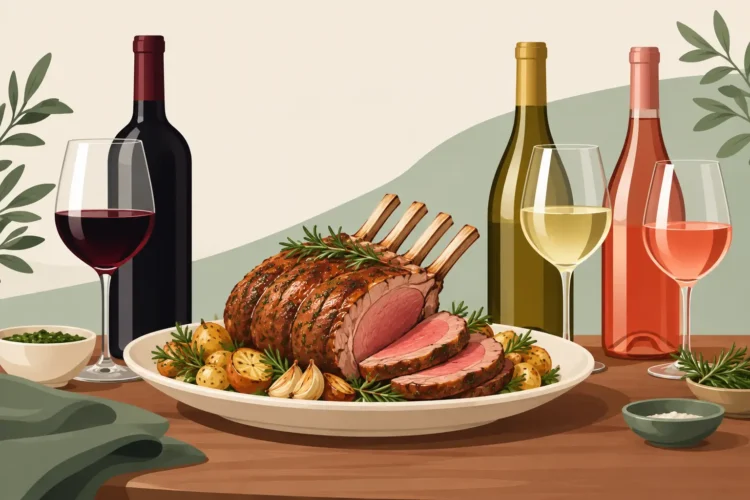
A leg of lamb fresh from the oven, fragrant with rosemary and garlic, calls for more than a random ‘big red’. Which wine suits roast lamb depends on the cut, the herbs, the sauce and, crucially, how pink you like the meat. Get those details right and the wine brings out lamb’s savoury sweetness rather than fighting its richness.
For most classic British roast lamb lunches, a medium-to-full-bodied French red with fresh acidity and ripe but not aggressive tannins is the sweet spot. Think Rhône Syrah, Bordeaux blends or Cabernet Franc from the Loire. But there is room for lighter reds, mature bottles and even the occasional white or sparkling wine when the recipe takes a different turn.
Which wine suits roast lamb with rosemary and garlic?
A red from the Rhône is a wonderfully dependable answer. Syrah, particularly from the northern Rhône, has black pepper, dark berry fruit, violet notes and a savoury, smoky edge that feels made for lamb’s browned crust. It has enough structure for a rosy leg or shoulder without flattening the herb flavours.
If you prefer a softer, more generous style, look towards a southern Rhône blend based on Grenache, Syrah and Mourvèdre. Grenache brings warm red fruit, while Syrah adds spice and Mourvèdre gives an earthy, game-like note. These wines are particularly good with slow-roasted shoulder, where the meat is tender and the fat has had time to render.
The key is balance. Very high-alcohol reds can make a meal feel heavy, especially if you are serving roast potatoes, gravy and rich sides. Choose a bottle with enough freshness to reset the palate between mouthfuls. Organic and biodynamically farmed Rhône estates often deliver that sense of energy particularly well, though the producer and vintage matter more than any single label on the bottle.
A classic alternative: claret with roast lamb
Bordeaux has earned its traditional place beside lamb for good reason. Cabernet Sauvignon offers blackcurrant, cedar and firm tannins; Merlot rounds the blend with plum fruit and supple texture; Cabernet Franc can introduce a fragrant, leafy lift. Together, they handle lamb’s richness elegantly.
For a simple roast leg served pink, choose a youthful but balanced Bordeaux with moderate oak. For lamb cooked longer with a deeper, stickier gravy, a more mature bottle can be superb. With age, the tannins soften and the wine develops savoury notes of tobacco, forest floor and dried herbs that echo the roast rather than competing with it.
There is a practical consideration here: young, heavily oaked claret can feel drying if the lamb is lean or well done. If that is your preferred style of cooking, choose a Merlot-led Bordeaux, a mature vintage, or a softer wine from the right bank rather than the most muscular Cabernet you can find.
Match the wine to the cut and cooking style
Roast lamb is not one fixed dish. A quick-roasted rack, a pink leg, a slow-cooked shoulder and a herb-crusted loin each bring different textures to the table. The more tender and delicately flavoured the cut, the less you need a powerful wine.
A rack of lamb, especially with a neat herb crust, is excellent with Pinot Noir. Burgundy is the celebrated choice, offering red cherry, raspberry, woodland earth and fine tannins. Its lighter body lets the sweet, juicy flavour of the lamb remain centre stage. A good Pinot from another French region can offer a similarly graceful match at a more everyday price.
For a pink leg of lamb, Cabernet Franc from the Loire is an inspired option. It has red and black fruit, gentle herbal notes and lively acidity, often with less weight than Bordeaux. That freshness works beautifully with mint sauce, green beans or spring vegetables. It is also a good choice for guests who find weighty reds tiring over a long Sunday lunch.
Slow-cooked shoulder needs more depth. Its melting texture and caramelised edges welcome a southern Rhône red, a Syrah from Languedoc-Roussillon, or a structured Corbières or Minervois blend. These wines have the fruit concentration and spice to stand up to a richer sauce, beans, aubergine or a Provençal-style garnish.
Let the sauce make the final decision
The sauce often tells you more about the wine match than the lamb itself. Red wine jus and rosemary gravy are natural territory for Rhône Syrah or Bordeaux. A rich anchovy, garlic and herb dressing can also work with a savoury red, but avoid anything excessively fruity or sweet-toned.
Mint sauce changes the picture slightly. Its vinegar and sweetness make a fresh red more appealing than a tannic blockbuster. Loire Cabernet Franc, Beaujolais made from Gamay, or a lightly chilled Pinot Noir will keep the meal lively. Serve lighter reds around 14-16°C, not at a warm room temperature, to preserve their fruit and freshness.
If your lamb comes with a Mediterranean character – perhaps olives, tomatoes, peppers, aubergine or ratatouille – choose a southern French red with herbs and spice in its profile. A blend from the Languedoc or Rhône will feel natural beside those flavours. For lamb with a sweet glaze of honey, pomegranate or apricot, favour ripe fruit but retain acidity. Grenache-led reds are usually more sympathetic than stern Cabernet.
Do white wine and sparkling wine ever work?
They can, and this is where pairing gets more interesting. White wine is not the obvious choice for a traditional roast leg with gravy, but it can be delicious with lighter lamb dishes. A fuller-bodied white Rhône blend, especially one with Marsanne, Roussanne or Viognier, suits lamb prepared with lemon, garlic, herbs and spring vegetables. Its textured feel matches the meat, while its floral and stone-fruit character lifts the dish.
An oak-aged Chardonnay from Burgundy can work with lamb rump or cutlets served pink, particularly with a creamy pea, broad bean or mushroom accompaniment. Keep the oak measured. A heavily buttery style can make the pairing too rich, while a fresher, mineral Chardonnay holds the meal together.
Sparkling wine is a brilliant but underused option for a celebratory lamb lunch. A dry traditional-method sparkling wine has acidity to cut through fat and bubbles to refresh the palate. It is especially good with crisp lamb croquettes, roast potatoes and salty accompaniments. Choose Brut rather than anything noticeably sweet.
How to choose confidently from a French wine shelf
Start with the roast, not the prestige of the bottle. For classic herb-roasted lamb, look for Syrah, Rhône blends or Bordeaux. For a lighter spring meal, Pinot Noir or Loire Cabernet Franc makes more sense. For long-cooked shoulder and rich accompaniments, move towards southern Rhône or Languedoc blends with a little more warmth and spice.
Then consider the people at your table. If some guests are red-wine enthusiasts and others only drink it occasionally, a rounded southern Rhône blend is often the most crowd-pleasing compromise. If the meal is about a special bottle, a mature Bordeaux or fine northern Rhône Syrah can make the occasion feel properly memorable. At Wine Affairs, filtering by region, grape or sustainable farming approach can make that choice far less daunting.
Finally, serve the wine at the right temperature and give it some air. Most fuller reds show best around 16-18°C. If the bottle has been kept in a warm kitchen, 20 minutes in the fridge is usually helpful. Open a young, structured red an hour before lunch, or pour it into a decanter if you have one. A mature bottle needs gentler handling and less air.
There is no need to make roast lamb a test of wine knowledge. Choose a French red with freshness, match its weight to the cooking, and let the herbs and sauce guide the final call. Then pour generously, pass the potatoes, and enjoy the bit that matters most: a table full of people lingering over lunch.