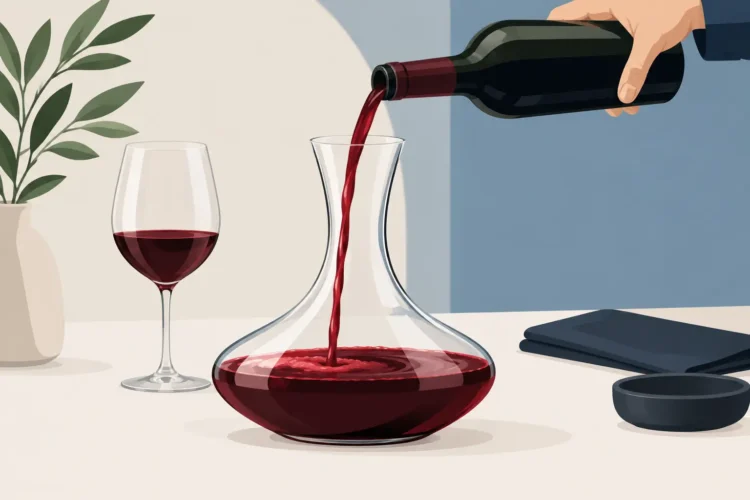
A just-opened young red can smell as though it is keeping its cards close to its chest: a little tight, perhaps floral or oaky, with firm tannins that dry the mouth. Give it air, though, and the fruit can suddenly feel juicier and the texture far more welcoming. Knowing how to decant young wine is less about ceremony than giving a bottle the best possible chance to show what it can do.
For most wines made to be enjoyed in their first few years, decanting is simple and forgiving. You do not need a crystal decanter, a solemn expression or a candle. A clean jug, carafe or large glass vessel will do nicely. What matters is the contact with air, and keeping an eye on the wine as it changes.
Why young wines often benefit from air
Young wine has had less time in bottle for its aromas, tannins and acidity to settle into one another. This is particularly noticeable in structured reds: Cabernet Sauvignon, Syrah, Malbec, Mourvèdre, Tannat and some youthful Bordeaux blends can feel closed or angular immediately after the cork or screwcap comes off. Decanting introduces oxygen quickly, allowing some of those firmer edges to soften and the perfume to emerge.
It is not only a red-wine habit. A concentrated white Burgundy, a dry Chenin Blanc from the Loire, a serious Rhône white or a young natural wine that seems a touch reduced can all become more expressive with a little air. Reduction is a winemaking term for aromas created in a low-oxygen environment – sometimes reminiscent of struck match, smoke or, less appealingly, cabbage. A brief decant can help, but it is not a cure for every fault.
The trade-off is that oxygen keeps working. A wine that is beautifully open after 45 minutes may seem flatter and less fruity several hours later. With delicate bottles, particularly low-sulphur or no-added-sulphite wines, that change can happen faster. Decant to improve the glass in front of you, not because a rule says every good bottle must spend the evening in a decanter.
How to decant young wine, step by step
Start by opening the bottle and pouring a small taste. This is the useful bit people skip. Notice whether the wine seems closed, heavily tannic, smoky, sharp or simply shy. If it already smells generous and tastes balanced, serve it from the bottle and let each glass evolve naturally.
If it needs air, pour the bottle steadily into a clean decanter or jug. For a young wine, a vessel with a broad base is helpful because it exposes more surface area to oxygen. There is no need to pour in slow motion. A reasonably brisk pour is exactly the point here.
Leave the wine for 20 minutes, then taste again. If it still feels compact, give it another 20 to 30 minutes. Most young, medium-bodied reds will be in a very happy place after 30 to 60 minutes. Bigger, more tannic examples may enjoy one to two hours, especially if served with a hearty supper rather than sipped on their own.
Keep the decanter somewhere cool, away from direct sunlight and the warmest part of the kitchen. Air is helpful; warmth is not. Red wine is often served too warm in British homes, which can make alcohol feel more obvious and fruit less fresh. Around 15-18°C suits most reds, while fuller whites are usually better slightly cooler than room temperature.
No decanter? Use what you have
A wide, clean jug is perfectly acceptable. So is pouring the wine into a large bowl-shaped glass, then giving it a gentle swirl before tasting. If you only have the bottle, pour out a glass to create some headspace, replace the closure loosely and wait a little while. It works more slowly, but it works.
Avoid gadgets that aggressively aerate wine unless you enjoy the result and know the bottle. They can make an initially tight wine seem more open in seconds, but they can also exaggerate alcohol or strip the detail from a subtle wine. Time and tasting are usually the better tools.
Decanting times by style, not prestige
There is no timer that knows your wine better than your nose and palate, but these are sensible starting points.
Light, youthful reds such as Beaujolais, Pinot Noir, Loire Cabernet Franc and many easy-going Languedoc blends generally need little more than 15 to 30 minutes, if any. Their charm is often perfume, freshness and drinkability, which too much air can blur.
Medium-bodied reds – think Merlot-led Bordeaux, Côtes du Rhône, Grenache-Syrah blends or a young organic Corbières – often benefit from 30 to 60 minutes. This is enough to relax tannin and bring out red and black fruit without losing the wine’s energy.
For powerful young reds, allow 60 to 120 minutes. A Cabernet-based Bordeaux, a dense Cahors Malbec or a serious Syrah may be much more harmonious after a proper rest in a broad decanter. Taste as you go, particularly if the bottle is from a warm vintage and already tastes ripe.
Aromatic whites and rosés rarely require decanting. Their appeal lies in lifted aromas and crispness, and extended air can make them feel less vibrant. The exception is a textured, barrel-fermented or lees-aged white that seems tight on opening. Try 15 minutes in a carafe, served cool, and reassess.
Watch for sediment – but do not confuse it with young wine
Decanting older wine is often about leaving sediment behind. Decanting young wine is principally about aeration. Most young bottles will have little or no sediment, although unfiltered wines and some natural wines may contain a harmless haze or fine deposit.
If you see sediment, stand the bottle upright for a few hours beforehand if possible. Pour gently and stop when the deposit reaches the shoulder of the bottle. Do not worry if a little cloudiness makes it into the decanter: it is usually a texture or appearance issue, not a safety concern. A wine that smells clean and tastes good is the final test.
Taste with food in mind
The right decanting time changes with the meal. A young, tannic red can taste stern on its own but become wonderfully composed beside roast lamb, mushroom pie or a properly charred steak. Food softens the impression of tannin and can bring hidden savoury notes into focus.
That is why it pays to decant before you start cooking, not at a fixed point dictated by the label. Pour a taste when the oven goes on, taste again as you set the table, then decide whether it is ready. Wine is not an exam with one correct answer.
For sustainably farmed, organic and biodynamic wines, this approach is especially useful. These bottles can be beautifully expressive but less uniform from one producer, vintage or bottle to the next. Let the wine tell you what it needs. If you are choosing a young French red for dinner and would like a steer on style, Wine Affairs can help make the decision feel pleasantly straightforward.
A final practical thought: decanting is not a performance. It is a small act of patience that can turn a good young bottle into the wine its grower hoped you would taste. Pour, pause, taste and follow the glass.