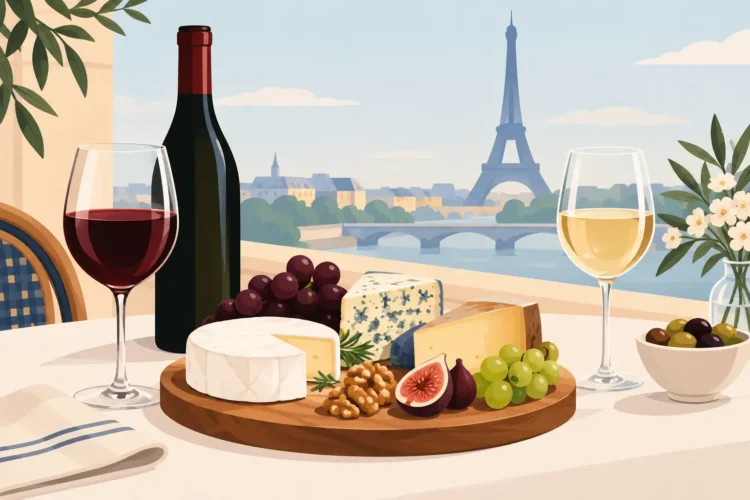
A great cheese board can make an ordinary Friday feel properly celebratory. Knowing how to pair wine cheese means you do not need a cellar full of expensive bottles or a degree in French appellations. You simply need to notice a cheese’s salt, richness, tang and texture, then choose a wine that either refreshes the palate or echoes those flavours.
The most useful rule is this: the bigger, saltier and more pungent the cheese, the more carefully the wine needs to work. Crisp whites and sparkling wines are often more flexible than tannic reds, especially when the board contains several styles. Bonjour to easier, more delicious evenings.
Start with the cheese, not the colour of the wine
It is tempting to match red wine with every cheese, but it is often the route to a bitter, metallic mouthful. Tannins – the drying sensation in red wine – can clash with salt and accentuate the ammonia-like notes found in ripe soft cheeses. A chilled white, rosé or fizz may be the better partner.
Think in terms of weight and contrast. A delicate fresh goat’s cheese needs a light, zesty wine. A buttery triple-cream cheese benefits from acidity and bubbles. A hard, nutty mountain cheese can handle a fuller-bodied white or a supple red. Blue cheese, meanwhile, has enough salt and power to demand sweetness.
Temperature matters too. Serve white and sparkling wine cool, but not ice-cold, so their fruit and texture can show. Take cheese out of the fridge around 30 minutes before serving. Cold cheese tastes muted, which can make even a thoughtful pairing seem flat.
How to pair wine cheese by style
Fresh and soft goat’s cheese
Young goat’s cheese is bright, lemony and tangy, with a chalky or creamy texture depending on the make. Its natural home is the Loire. A dry Sauvignon Blanc from Sancerre, Pouilly-Fumé or Touraine brings citrus, green herbs and refreshing acidity that picks up the cheese’s freshness rather than competing with it.
If Sauvignon Blanc feels too familiar, try a dry Chenin Blanc from the Loire. It can be waxier and more textured, while retaining the lift that goat’s cheese needs. An organic or biodynamic example can be particularly expressive, though the farming method is not a flavour guarantee in itself. What matters most is freshness and balance.
Brie, Camembert and bloomy-rind cheeses
These cheeses are creamy underneath, mushroomy around the rind and increasingly savoury as they ripen. The common red-wine pairing is not always kind here. Instead, pour Champagne or a well-made Crémant. The bubbles cut through the richness, while bready, nutty notes mirror the cheese’s soft-rind character.
For a still option, look towards a Chardonnay with measured oak or a rounded white Burgundy. The wine should have enough body to meet the creaminess, but enough acidity to stop the combination becoming heavy. With a very ripe Camembert, a gently fruity, low-tannin red such as Beaujolais can work, especially if the cheese is served with crusty bread rather than sugary chutney.
Washed-rind cheeses
Époisses, Munster and similar washed-rind cheeses are gloriously aromatic. They can smell formidable, yet their centres are often lush and savoury rather than aggressive. Avoid very tannic reds, which can make their pungency seem louder.
An off-dry Alsace white is a brilliant answer. Gewürztraminer has rose, lychee and spice notes that stand up to the cheese, while a little residual sweetness softens salt and funk. Pinot Gris from Alsace can offer a less perfumed but equally generous alternative. Serve it lightly chilled and let the cheese do its thing.
Comté, Gruyère and hard mountain cheeses
Aged Alpine-style cheeses are among the most wine-friendly on the board. Comté can show toasted hazelnut, caramel, fruit and savoury broth-like depth. Jura is a natural French match: a Chardonnay with a nutty edge or a local Savagnin can create a lovely echo of the cheese’s complexity.
If you prefer red, choose one with moderate tannin and lively acidity. Pinot Noir from Burgundy, particularly a lighter village wine, is a smart choice. Its red-cherry fruit and earthy notes sit comfortably beside mature Comté without dominating it. This is also one of the few cheeses that can make an oxidative Jura style feel immediately approachable.
Cheddar and other firm British favourites
Cheddar varies enormously. Young Cheddar is milky and clean; mature Cheddar is crumbly, salty and deeply savoury. A ripe, fruit-forward red from the Rhône or Languedoc can work beautifully with mature examples, provided its tannins are not too firm. Look for Grenache-led blends, which tend to offer generous berry fruit, pepper and a softer texture.
For a sharper farmhouse Cheddar, a dry sparkling wine is surprisingly good. Its acidity cleans the palate between bites, and the contrast keeps salty richness from building up. Apple chutney can make this pairing even better, but remember that sweet accompaniments make dry reds taste leaner and more tannic.
Blue cheese
Blue cheese has salt, cream, spice and power. This is where sweet wine earns its place. Sauternes and other late-harvest whites have honeyed fruit, acidity and enough concentration to balance a creamy blue such as Fourme d’Ambert or Bleu d’Auvergne.
The logic is simple: sweetness softens salt, while acidity prevents the pairing becoming cloying. A salty Stilton-style cheese also works with a rich sweet wine, but avoid serving the wine too warm. For a fresher alternative, try a lightly sweet sparkling wine. The bubbles bring lift where a dessert wine brings richness.
Build a cheese board around one wine, or one cheese around the wine
For a mixed board, selecting a single bottle to suit everything can be more difficult than choosing several cheeses for one wine. The easiest all-rounders are sparkling wine, dry Chenin Blanc and lighter Pinot Noir. They bring enough acidity and flavour without overwhelming delicate cheeses.
If you are opening a special bottle, build the board around it. A white Burgundy wants Comté, Brie or a mild washed-rind cheese. A Loire Sauvignon Blanc wants goat’s cheese, fresh herbs and perhaps a few radishes. A juicy Rhône red welcomes mature Cheddar, tomme-style cheeses and charcuterie, though keep blue cheese away from it.
When serving several wines, move from lightest to richest. Begin with sparkling or crisp white beside fresh cheeses, then bring out fuller whites and gentle reds for the hard cheeses. Finish with blue cheese and a sweet wine. It is not formal ceremony, just a way to stop the boldest flavours flattening everything that follows.
The accompaniments can change the pairing
Bread, crackers, fruit and chutney are not merely decorative. They alter what the wine tastes like. Sweet fig jam, quince paste and caramelised onions can make a dry wine seem sharper, so use them sparingly with tannic red wines. Salty nuts also magnify tannin.
Fresh pear, apple and grapes are more forgiving, particularly with white wines. Walnuts are excellent with Comté and Jura whites, while honey is lovely with goat’s cheese and an off-dry Chenin. If you are serving charcuterie, choose a wine with acidity: the fat and salt need refreshment, not more weight.
Three easy French pairings for your next table
If you would rather begin with combinations that rarely disappoint, serve Loire Sauvignon Blanc with a fresh goat’s cheese; pour Crémant with Brie or Camembert; or open a Jura Chardonnay alongside Comté. Each pairing has a clear reason behind it, but none requires a solemn tasting note or a complicated shopping list.
For a more relaxed gathering, choose one sparkling bottle and offer goat’s cheese, Brie and young Comté with good bread. For a more adventurous evening, put an aromatic Alsace white beside washed-rind cheese, then save a small glass of sweet wine for the blue. Different cheeses can be enjoyed in one sitting, but they do not all need to share the same bottle.
The best pairing is the one that makes you reach for another bite and another sip. Start with a cheese you already love, choose a French wine with enough freshness for the job, and let your own palate have the final word. Wine Affairs is always pleased to help turn that first successful match into your next favourite bottle.