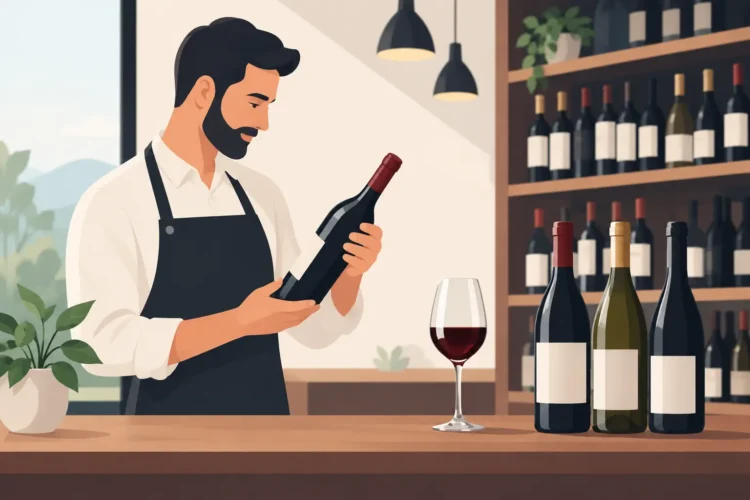
A bottle can look reassuringly French, carry a smart label and sit at a tempting price, yet tell you remarkably little about what is inside. That is where independent wine merchants earn their place. Rather than asking you to decode a wall of labels alone, a good merchant narrows the field, knows the people behind the wine and helps you choose a bottle that suits your table, taste and budget.
For many of us, wine is not a collecting hobby or a test of obscure knowledge. It is what you open with a Friday supper, bring to friends, pour alongside a roast chicken or give as a thoughtful present. The pleasure is greater when the wine has a proper sense of place – and when you know why it tastes as it does.
What wine merchants do differently
Supermarkets have a role: they are convenient and familiar. Their shelves are built to offer broad choice at scale, often with labels designed to make a quick decision easy. Independent wine merchants work to a different brief. They tend to buy a more focused range, choosing wines for producer character, regional identity and value rather than simply for a recognisable brand name.
That focus matters in France, where a label may lead with an appellation rather than a grape variety. A bottle from Sancerre is usually Sauvignon Blanc; a red from Morgon is Beaujolais made from Gamay; Chablis is Chardonnay, though it may taste rather unlike a rich, buttery New World Chardonnay. A knowledgeable merchant translates those details into useful language: crisp and mineral, juicy and lightly chilled, savoury and structured, or generous enough for a winter stew.
The difference is not that every bottle must be rare or expensive. It is that the range has been selected with a reason. One Loire Chenin Blanc may be chosen for its bright apple fruit and food-friendly freshness, while another earns its place for its richer texture and gentle honeyed notes. Both can be excellent. The right one depends on whether you are serving goat’s cheese, spicy food or simply having a glass after work.
A French wine range should feel like a map, not a maze
France offers extraordinary variety, but that variety can make buying wine feel needlessly formal. Burgundy alone can mean lean Chablis, fragrant Pinot Noir from the Côte de Nuits, or generous Chardonnay from the Mâconnais. Bordeaux can be a polished claret for Sunday lunch, a lighter red for the week, or a dry white with citrus and stone-fruit character.
A helpful merchant gives you ways into the country beyond memorising every village. You might start with a grape: Syrah for peppery Rhône reds, Pinot Noir for silky red-fruit wines, or Albariño-like freshness from a Loire white. You might shop by moment: rosé for a sunny lunch, sparkling Crémant for a celebration, or a mixed case to explore without committing to six identical bottles.
Regional clues still offer genuine value. Languedoc-Roussillon often delivers generous, sunny reds at approachable prices. The Rhône is a fine place to look for Syrah, Grenache and blends with herbs, dark fruit and spice. Alsace can be brilliant with aromatic whites and food that has a little heat. Jura and Corsica reward the curious drinker with distinctive wines that do not taste like the usual suspects.
There is no need to treat these regions as a hierarchy. A modestly priced, well-made Côtes du Rhône can be more enjoyable on a Tuesday than a grand bottle opened at the wrong moment. Good advice starts with the occasion, not the prestige of the label.
Sustainable farming is part of the flavour conversation
Wine begins in the vineyard, so a merchant’s approach to sustainability should go beyond a green symbol on a product page. Farming choices shape the soils, the surrounding wildlife and, often, the character of the grapes that reach the cellar.
Organic wine comes from vineyards farmed without synthetic herbicides, pesticides or fertilisers, under defined certification rules. Biodynamic growers follow organic principles while treating the vineyard as a wider living system, often working with composts, cover crops and planting calendars. Natural wine is less tightly defined as a legal category, but usually refers to wine made with minimal intervention, often from organically or biodynamically farmed grapes.
Then there is HVE, short for Haute Valeur Environnementale. HVE certification considers a farm’s environmental practices across areas including biodiversity, plant-protection strategy, fertiliser management and water. HVE3 is its highest level. It is not identical to organic certification, so it is worth understanding the distinction rather than assuming one is automatically better than the other. Both can signal serious care in the vineyard, but they measure different things.
Sulphites need the same plain speaking. Sulphur dioxide has long been used in winemaking to help protect wine from oxidation and spoilage. Organic wines may contain sulphites, and conventional wines can be carefully made with very little added sulphur. Wines labelled as having no added sulphites have had none added during production, though tiny naturally occurring amounts may still be present. Low-intervention does not automatically mean superior; it can mean a more delicate, less predictable wine. The best choice is one that matches both your taste and your appetite for experimentation.
How to choose a bottle with confidence
Start with your own preferences, not the most impressive-sounding appellation. If you enjoy a smooth, generous red, try a Grenache-led southern Rhône blend or a ripe Languedoc red. If you like freshness and lift, look towards Loire Sauvignon Blanc, Muscadet or dry Alsace Riesling. For a lighter red, Gamay from Beaujolais or Pinot Noir can be a lovely answer, particularly with charcuterie, roast vegetables or salmon.
Food is a useful guide, but not a strict rulebook. A creamy white can flatter roast chicken and mushrooms; a lively white is excellent with fish, salads and goat’s cheese. Rosé is much more versatile than a warm-weather aperitif, especially with grilled vegetables, mezze and gently spiced dishes. When in doubt, think about weight. Delicate food generally prefers a lighter wine, while richer dishes can take more body, tannin or oak.
For a dinner party, a mixed case can take the pressure off. Choose a combination of approachable whites, a versatile rosé and reds in more than one style. That gives guests options and gives you a useful introduction to different regions. Buying six bottles of a favourite can make sense too, particularly when quantity savings apply, but a mixed case is often the more enjoyable route when you are still learning what you like.
Price deserves honesty. Paying more can bring older vines, lower yields, more careful harvesting or longer ageing, but price alone is not a guarantee of pleasure. A specialist merchant should be able to point you towards bottles that overdeliver at everyday prices, as well as wines for a milestone meal or a meaningful gift.
The value of asking a real question
The best wine advice is specific. “I need a red for lamb” is a good start. “I like Rioja but want something French, and we are having herby lamb with aubergine” is even better. From there, a recommendation can account for your preferred style, the food, the season and how much you wish to spend.
That personal exchange is the lasting advantage of an independent merchant. At Wine Affairs, the aim is not to make every customer speak fluent appellation. It is to make French wine feel welcoming: use a region, grape, producer or sustainability preference as a starting point, then follow your own taste.
Bonjour – choose one bottle that sounds genuinely right for tonight. Read the producer notes, ask about the farming if it matters to you, and serve it with food or company that deserves a little attention. A good wine merchant makes that small decision feel less like a gamble and more like the beginning of a favourite.