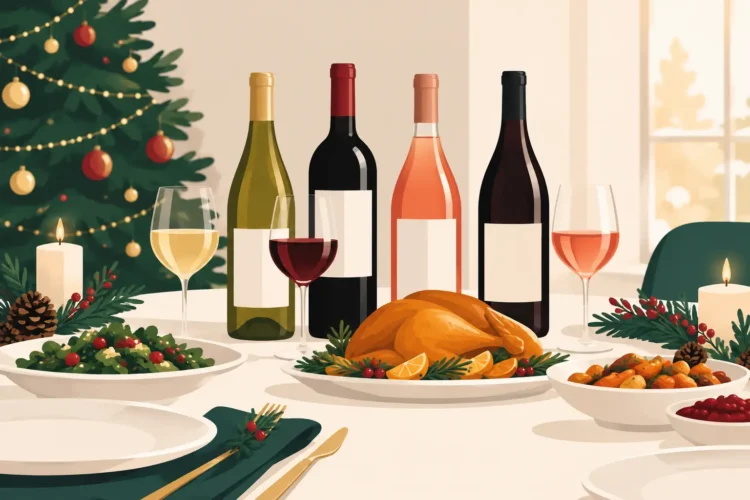
Christmas lunch has a peculiar way of putting one bottle under enormous pressure. It needs to work with salty canapés, turkey and trimmings, possibly a glazed ham, a nutty stuffing, a sharp cranberry sauce and that uncle who only drinks red. The best wines for Christmas lunch are not necessarily the most expensive or powerful. They are the bottles with freshness, texture and enough character to keep pace with a crowded plate.
French wine is particularly good at this job. There is a natural fit between classic French styles and a British Christmas table: bright sparkling wine for arrivals, white with enough body for roast poultry, and reds that bring warmth without flattening the food. The aim is not to create a rigid tasting menu. It is to choose a small, well-judged line-up that lets everyone enjoy the meal.
Start Christmas lunch with proper sparkle
A sparkling wine earns its place long before the turkey appears. It refreshes the palate after smoked salmon blinis, cheese straws, pâté or roast chestnuts, and instantly makes the first glass feel festive. Champagne is wonderful, of course, but it is not the only French answer.
Crémant – French traditional-method sparkling wine made outside Champagne – is a very sensible choice for a larger gathering. Crémant de Bourgogne often has apple, citrus and a lightly toasty edge, while Crémant d’Alsace can be particularly crisp and floral. Both have the fine bubbles and food-friendly acidity needed for nibbles, and they leave room in the budget for a more special bottle with the main course.
Look for Brut rather than sweeter styles if your starters are savoury. If you are serving smoked salmon or gravadlax, a Blanc de Blancs, made principally from white grapes, brings a clean lemony lift. With richer pâté or a creamy mushroom tart, a fuller traditional-method sparkling wine with a little bottle age will feel more generous.
The best wines for Christmas lunch with turkey
Turkey is mild enough to welcome white wine, but the roast dinner around it is not. Butter, stuffing, bread sauce, pigs in blankets and gravy all ask for more than a light, neutral white. The sweet spot is a white with ripe fruit, good acidity and some texture.
White Burgundy for a classic roast
White Burgundy, usually made from Chardonnay, is one of the most reliable pairings for roast turkey. Its flavours can range from citrus and orchard fruit to hazelnut, butter and gentle spice, depending on the producer and appellation. That combination complements the bird while standing up to creamy sauces and chestnut stuffing.
You do not need to chase the grandest names. A carefully made Mâconnais Chardonnay, Saint-Véran or Montagny can offer the rounded, quietly complex style people want at Christmas without becoming an extravagant purchase. If your lunch leans rich – butter-basted turkey, dauphinoise potatoes, creamy bread sauce – choose a bottle with a touch of oak and age. If you prefer a lighter table, opt for a fresher, more citrus-led Burgundy.
Loire Chenin Blanc for brightness and versatility
For a white with more zip, Chenin Blanc from the Loire is a brilliant alternative. Dry Vouvray or Saumur Blanc can bring quince, apple and subtle honeyed notes, held together by lively acidity. That freshness is especially useful beside cranberry sauce, sprouts and other components with a sweet or bitter edge.
Chenin is also a fine choice when there are vegetarian dishes on the table. It is at home with a mushroom and lentil Wellington, roasted squash, thyme, walnuts and caramelised onions. A dry example will be more flexible than a noticeably sweet one, unless you are deliberately pairing it with a spicy or sweet-glazed dish.
Alsace for aromatic sides and spice
If your Christmas cooking includes apricot stuffing, spiced red cabbage, a little chilli, or Asian-inspired roast duck, look towards Alsace. Dry Riesling is piercing and elegant with fatty foods, while Pinot Gris has a broader, more textured character that suits roast pork or turkey with richer trimmings. Gewurztraminer can be glorious with strongly aromatic dishes, but its rose, lychee and spice profile is more distinctive, so it is best chosen when the menu calls for it rather than as an all-purpose crowd-pleaser.
Red wine: favour freshness over sheer weight
The traditional instinct is to open a big red at Christmas. Sometimes that works, particularly with beef or venison, but heavy tannin and high alcohol can make turkey taste dry and make the whole meal feel rather tiring. For a standard turkey lunch, a medium-bodied red with juicy fruit, moderate tannin and fresh acidity is usually the cleverer pour.
Pinot Noir is the obvious starting point. Red Burgundy offers red cherry, raspberry, woodland notes and a silky shape that works beautifully with turkey, cranberry sauce and mushroom-based sides. A village Burgundy is lovely, but thoughtful Pinot Noir from the Jura, Sancerre or the Languedoc can offer equally satisfying festive drinking in a different register. Serve it slightly cool, around 14-16°C, rather than at a centrally heated room temperature.
Beaujolais, made from Gamay, deserves a place at far more Christmas tables. A Fleurie or Morgon has enough depth for the roast, yet remains juicy and bright. It is especially good if your family likes red wine but the food is not centred on beef. The gentle tannins also make it less likely to clash with sprouts, cranberry sauce or a little sweetness in the stuffing.
For those who want a more substantial red, the Rhône is a generous direction to take. A Côtes du Rhône based on Grenache and Syrah brings ripe berries, pepper and warming spice, often with a softer tannin profile than a young Cabernet-led Bordeaux. It is a natural partner for roast lamb, duck, sausages and a deeply savoury gravy. Choose a balanced, medium-bodied example for turkey; save the most concentrated, oaky bottles for a beef rib or a quieter post-lunch glass.
Match the bottle to the centrepiece, not just the tradition
Christmas menus vary more than they once did, and the wine should follow the food rather than a rulebook. Roast beef calls for a more structured red: a mature Bordeaux, a Cabernet Franc from the Loire, or a serious Rhône can all work well. The key word is mature. A bottle with a few years of development will have softened its tannins and gained savoury notes that are delicious with roast meat and gravy.
With glazed ham, look for fruit and freshness. Beaujolais, Pinot Noir and dry Loire Chenin Blanc all make sense; a very tannic red can taste hard beside the ham’s salt and sweetness. Roast duck is one of the easiest pairings of all, welcoming Pinot Noir, cru Beaujolais or a supple southern Rhône.
A vegetarian centrepiece needs just as much consideration. Mushroom Wellington and truffled dishes call for Pinot Noir or a textured Chardonnay. A nut roast with cranberry sauce suits Chenin Blanc or Gamay. For a spiced squash tart, dry Riesling or an aromatic Alsace white can be the better choice. The detail that matters most is the sauce and seasoning, not whether a dish contains meat.
Do not forget the cheese course and pudding
A well-made Christmas lunch tends to run late, so it helps to have a wine that can stay on the table for cheese. A mature red Burgundy, a supple Bordeaux or a Rhône red will cope with Cheddar and Comté, though blue cheese needs a different approach. Its salt and intensity are far happier with sweetness, such as a late-harvest Alsace wine or sweet Loire Chenin Blanc.
For Christmas pudding, mince pies and sticky toffee flavours, choose a properly sweet wine rather than hoping a dry red will manage. A small pour of sweet Jurançon, Coteaux du Layon or late-harvest Gewurztraminer can make dessert feel considered without requiring large glasses. Sweet wines are intense, so a half bottle is often the most practical size.
A more thoughtful way to buy for the table
One sparkling, two still wines and a dessert bottle is ample for many gatherings. As a rough guide, a 75cl bottle provides five small glasses or four generous ones. For six adults having an aperitif and lunch, two bottles of sparkling, three whites and three reds is a comfortable starting point, adjusted for the habits of your guests and the length of the afternoon.
Buying from producers who farm with care adds a welcome extra dimension to the occasion. Organic, biodynamic and HVE-certified estates all approach sustainability differently, but each can indicate closer attention to the vineyard and its surrounding ecosystem. These terms are not guarantees of a particular flavour, so treat them as useful information alongside region, grape and producer style. A low-intervention wine can be wonderfully vivid, but it may be less predictable than a classic appellation wine, which matters if you are serving a large family lunch.
At Wine Affairs, filtering by French region, grape variety and farming approach makes it easier to build a mixed case that feels personal rather than random. Bonjour, and remember that the perfect Christmas bottle is often the one you are happy to open generously: chilled at the right temperature, poured before the gravy cools, and shared with the people around your table.