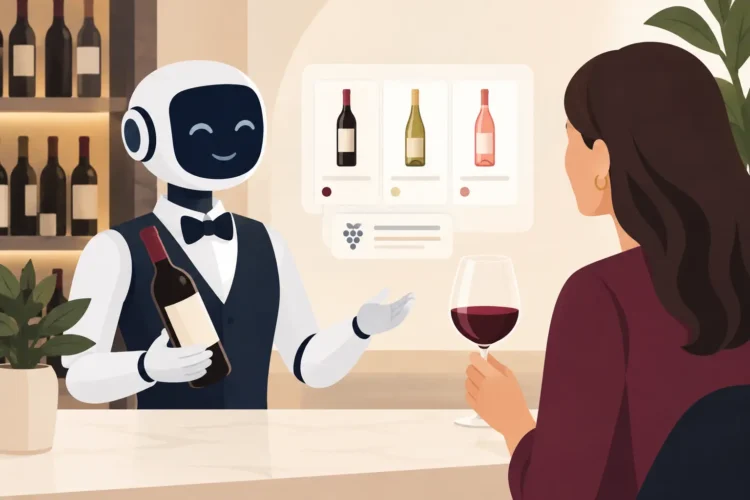
A wine recommendation is only as useful as the question behind it. Ask for “a nice red” and even the best tool has little to work with. Tell it you are cooking mushroom risotto, dislike jammy flavours, want to spend around £15 and would prefer an organic French bottle, and the answer becomes far more interesting. That is the real finding of this AI sommelier review: digital wine advice can be genuinely helpful when it starts a proper conversation.
For many of us, choosing wine online involves a familiar pause. A label may look appealing, but will the bottle suit the food, the occasion and the people around the table? An AI Sommelier aims to shorten that pause. It translates everyday preferences into useful wine language, then turns regions, grapes and styles into a recommendation you can feel confident ordering.
What an AI Sommelier actually does
An AI Sommelier is a conversational recommendation tool. Rather than asking you to know whether you fancy a Picpoul, Fleurie or Côtes du Rhône, it can work from plain English: crisp white for fish, light red for a summer barbecue, celebratory fizz that is not too dry, or a thoughtful gift for someone who loves Burgundy.
Its best role is not to replace a skilled sommelier in a restaurant or a producer who has spent a lifetime among the vines. It is to make specialist advice available at the moment you are browsing. That matters particularly with French wine, where a label often leads with an appellation or estate rather than a familiar grape variety.
A good tool should explain its reasoning, not merely name a bottle. If it suggests Loire Sauvignon Blanc, for example, it should tell you to expect fresh citrus, green apple and herbal notes, and explain why that lively acidity works with goat’s cheese, asparagus or grilled fish. The recommendation then becomes a small piece of wine education, rather than a black box.
AI Sommelier review: where it is most useful
The strongest results come from real-life decisions with a few useful details attached. Food pairing is the obvious example. A Sunday roast, Thai curry or creamy pasta gives the AI a clear starting point, while spice level, sauce and cooking method help refine the answer. A rich duck dish may suit a structured Pinot Noir or Syrah; a tomato-led vegetarian dish may call for a bright, savoury red with refreshing acidity instead.
It is equally useful for people who know what they do not like. “No heavy oak”, “not too sweet”, “I usually buy Marlborough Sauvignon but want a French alternative” and “I enjoy lighter reds served slightly cool” are all valuable instructions. They prevent generic answers and can lead to discoveries such as mineral Muscadet, aromatic Alsace Pinot Gris or juicy Beaujolais.
Budget is another area where AI can earn its place. Price alone does not determine quality, and an expensive bottle is not automatically the right choice for a casual Tuesday supper. A well-designed Sommelier can look for value within a style, distinguish between easy-drinking and age-worthy wines, and recommend a bottle that suits the moment rather than performing for the price tag.
For environmentally minded drinkers, the tool can also make unfamiliar terms easier to use. You might ask for an organic wine, biodynamic producer, HVE-certified estate or a low-intervention bottle with no added sulphites. These categories overlap, but they are not identical. Organic farming restricts synthetic treatments in the vineyard; biodynamic farming follows a broader farm-wide philosophy; HVE, or Haute Valeur Environnementale, assesses environmental practices including biodiversity and water management. No added sulphites refers to winemaking choices, not necessarily to farming method.
That distinction is worth preserving. An AI should help you find wines that match your priorities without pretending that one logo or phrase tells the whole story.
The questions that produce better bottles
The difference between a vague request and a useful recommendation is usually just a sentence or two. Give the AI your budget, whether you are buying one bottle or several, the food or occasion, and a flavour reference. Mention a wine you enjoyed recently if you can. “I liked a fresh Albariño but want a French white for roast chicken” is far more revealing than “recommend white wine”.
Be honest about sweetness, oak and body. Some drinkers say they dislike Chardonnay when what they really dislike is buttery, heavily oaked Chardonnay. Others think they want a powerful red when they are looking for ripe fruit, not tannin. These small distinctions are where a conversational tool can clarify rather than guess.
It also helps to say whether you are ready to experiment. If you want a dependable crowd-pleaser, the answer should be different from a request for something unusual from Jura or Corsica. Neither choice is more sophisticated. The point is to buy a wine that will be enjoyed.
At Wine Affairs, this kind of guidance works best alongside a carefully selected range, where recommendations can be tied to genuine producer information, region, farming approach and current availability. It makes the online shelf feel less like a search engine and more like a conversation with someone who has paid attention.
Where AI advice needs a little caution
An AI can organise information quickly, but it cannot taste the bottle in front of you. Vintage variation, bottle age and storage conditions matter, especially with more delicate wines. Nor can it know the exact saltiness of your sauce, how spicy your guests like their food, or whether a particular label has a sentimental place at the table.
There is also a risk of false precision. Wine is agricultural, and descriptions are guides rather than guarantees. A recommendation might promise red cherry, violets and fine tannins, but your own palate may pick up something different. That is not a failure. It is part of learning what you enjoy.
The practical limitation is stock. A recommendation is only useful if the suggested style is available at the right price and can reach you when needed. For a birthday gift or weekend dinner, delivery timing and bottle quantity can matter as much as the tasting note. Good wine advice should recognise those constraints rather than offering an impressive but impractical answer.
Finally, AI should not flatten the people behind the wine. A biodynamic grower in the Rhône, a family estate in the Loire and a co-operative in Languedoc-Roussillon may all make excellent wine for very different reasons. Producer stories, local conditions and thoughtful farming give a bottle character that no automated description should reduce to a handful of flavour tags.
Is an AI Sommelier better than browsing alone?
For straightforward repeat purchases, perhaps not. If you already know your favourite Provence rosé or always keep a particular Crémant in the fridge, browsing may be quicker. The value appears when you are uncertain, buying for someone else, planning a meal or keen to step beyond your usual choice without wasting a bottle.
It is especially helpful for turning a broad preference into a narrower route through French wine. Someone who likes soft, fruit-forward reds might be guided towards Merlot-led Bordeaux or a supple Rhône blend. Someone looking for zesty whites could compare Loire Chenin Blanc with Picpoul from the Languedoc. The aim is not to make the choice for you, but to give you a sensible place to begin.
The best experience combines quick digital guidance with the option of human judgement when the request is more personal or complex. A wedding order, a serious cellar purchase, a dietary concern or a particularly special gift may deserve a conversation with a real wine merchant. AI is excellent at opening the door; people remain very good at reading the room.
A better way to ask for wine advice
Treat an AI Sommelier as you would a friendly expert behind the counter. Start with the occasion, add what you enjoy and say what you would rather avoid. Bonjour, you might say: “I need two French reds for lamb chops on Saturday, around £14 to £18 each. We like juicy, elegant wines, not anything too oaky. Organic would be a bonus.” That is enough detail for a recommendation with real purpose.
Then keep a note of what worked. The bottle you loved after a long week, the white that transformed a simple plate of fish, the red that disappeared before the cheese arrived – these are better clues than any score. Each choice makes the next one a little more yours.