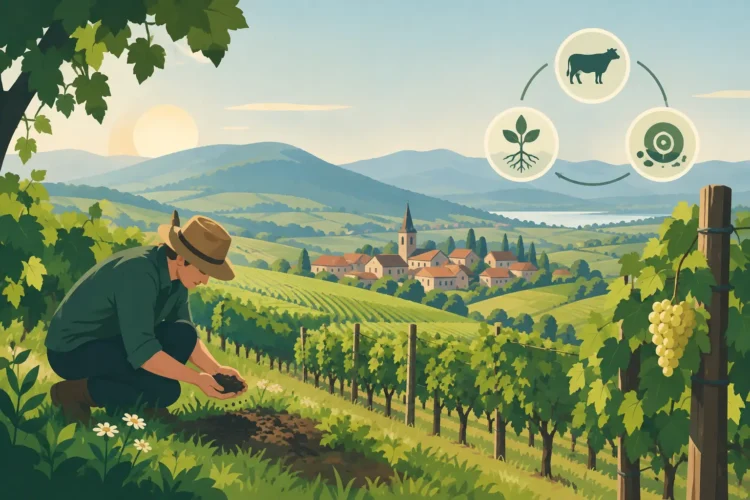
A great bottle of Alsace should not taste like a farming certificate. It should taste alive: perhaps dry and salty, perhaps richly textured, perhaps carrying that unmistakable mix of ripe orchard fruit, flowers and stony freshness. This biodynamic vineyard case study looks at how those flavours can begin long before grapes reach the cellar, through the work of one of Alsace’s most influential estates, Domaine Zind-Humbrecht.
The point is not that biodynamics guarantees better wine. It does not. Site, climate, grape variety, picking decisions and the winemaker’s judgement all matter enormously. But Zind-Humbrecht offers a useful, clear-eyed example of what long-term biodynamic farming can look like in a demanding, high-quality French vineyard.
A biodynamic vineyard case study: Domaine Zind-Humbrecht
Based in Turckheim, near Colmar in Alsace, Domaine Zind-Humbrecht farms exceptional sites across a patchwork of slopes and soils. The estate is especially known for expressive Riesling, Pinot Gris, Gewurztraminer and Muscat, including wines from celebrated grand cru vineyards. Its vineyards have been managed biodynamically for decades, with Demeter certification underpinning that commitment.
That location matters. Alsace sits in the rain shadow of the Vosges mountains and is one of France’s drier wine regions. Its vineyard landscape is also remarkably varied. Limestone, sandstone, granite, clay and volcanic material can occur within a short distance of each other, creating a vivid natural laboratory for wines shaped by place.
At Zind-Humbrecht, the ambition is not to make every wine taste the same. It is to let each parcel speak clearly. For drinkers, that means a Riesling from a stony, well-drained slope may feel taut, citrus-led and mineral, while a Pinot Gris from a richer clay-limestone site may be broader, spicier and more lavish in texture.
What biodynamics changes in the vineyard
Organic farming sets the baseline by excluding synthetic herbicides, pesticides and fertilisers. Biodynamic farming goes further by treating the vineyard as a living system, rather than a crop that can be managed chiefly with purchased inputs.
In practice, this means encouraging biodiversity, building compost, working with natural preparations and timing certain activities around biodynamic calendars. The calendar element attracts attention, sometimes scepticism, and rightly so: it should not be treated as a magic shortcut to great wine. The more tangible part is the relentless focus on soil life, plant balance and observation.
A biodynamic grower aims for vines that can regulate themselves better. Deep, healthy root systems may help a vine reach moisture during dry periods. Living soils can improve structure and drainage. Cover crops and natural vegetation can reduce erosion on slopes, feed beneficial insects and avoid the bare, compacted appearance often associated with intensive farming.
There are trade-offs. More manual work is needed, especially where weed control cannot rely on herbicides. Tractor passes for cultivation can themselves compact soil if used carelessly. Disease pressure can be severe in wet years, and copper-based treatments, while permitted in organic and biodynamic viticulture within strict limits, are not impact-free. Responsible growers must use them sparingly and adapt to the season rather than following a rigid recipe.
For an estate such as Zind-Humbrecht, biodynamics is therefore not a marketing layer applied at bottling. It is a labour-intensive way of making thousands of small decisions: when to cultivate, where to encourage grass cover, how to use compost, and whether a vine needs intervention at all.
Soil is the first cellar
The clearest lesson from this biodynamic vineyard case study is that soil care is not separate from wine style. It is part of it.
A vine grown in biologically active soil does not automatically produce more grapes. Often the opposite is true. Lower yields can result from older vines, careful pruning and a grower’s decision not to chase volume. What may improve is the vine’s ability to ripen fruit steadily and retain character, especially in a region where aromatic grapes can become heavy or overly sweet if picked too late.
In Alsace, that balance is central. Riesling needs acidity to stay precise. Gewurztraminer needs enough freshness to stop its exotic perfume becoming cloying. Pinot Gris needs tension beneath its generous fruit. Biodynamic farming cannot alter the weather, but it can support vines in coping with it.
The cellar: restraint rather than correction
Vineyard work only tells half the story. A perfectly farmed grape can still be flattened by an overworked cellar, while a modest vineyard can occasionally make a lovely wine in skilled hands. The relationship between farming and winemaking is what counts.
Zind-Humbrecht is known for allowing its wines time. Fermentations can be slow, and wines are commonly matured in large, old oak casks rather than new barrels designed to add obvious vanilla or toast. The aim is not zero intervention for its own sake. It is measured intervention, with the wine’s balance setting the agenda.
This is especially relevant when choosing biodynamic wine. The term does not mean every bottle will be cloudy, funky or sulphur-free. Nor does it mean every wine will be bone dry. Alsace has a long tradition of wines that range from dry to lusciously sweet, and residual sugar can be part of the style when held in balance by acidity and extract.
A good producer will be transparent through the glass. If a wine is dry, it should feel dry rather than merely look technical on a back label. If it has sweetness, it should have purpose: perhaps to soften a powerfully spicy dish, match rich pâté, or turn a blue cheese course into something memorable.
What the wines can teach a curious drinker
The most useful way to assess biodynamic wine is not to ask whether it is “better” in the abstract. Ask whether it gives a stronger sense of its grape, vineyard and vintage.
With a serious Alsace Riesling, look for more than lemon and apple. You may find wet stone, lime zest, white peach, herbs and a salty finish. With Gewurztraminer, the headline aromas might be lychee, rose and ginger, yet the best examples also carry bitterness, spice and lift. Pinot Gris can move from pear and smoke to saffron and honey, depending on ripeness and site.
Food reveals another side of these wines. Dry Riesling is a fine partner for grilled fish, sushi, roast chicken or goat’s cheese. A textured Pinot Gris works well with pork, squash, mushrooms and creamy sauces. Gewurztraminer is one of the most rewarding matches for fragrant curries and dishes with ginger, chilli or coriander, provided the wine’s sweetness is matched to the heat of the food.
Vintage also matters more than a neat certification badge. A hot year may create more expansive fruit and softer acidity. A cooler year can bring line and tension. Biodynamic farming may help growers preserve vineyard vitality across both, but it cannot make two very different seasons taste identical. That variation is a feature, not a flaw.
Choosing biodynamic wine with confidence
For shoppers, biodynamic is a helpful signal, but it should be the start of the conversation rather than the final answer. Look at the producer, region, grape and intended occasion. A fresh Loire Chenin Blanc and a late-harvest Alsace Pinot Gris may both be biodynamic, yet they suit entirely different meals and moods.
It is also worth separating three ideas that are often bundled together. Organic refers chiefly to permitted farming inputs. Biodynamic includes organic principles plus a whole-farm, soil-focused philosophy. Natural wine is a broader, less formally defined term, generally referring to low-intervention vineyard and cellar practices. There is overlap, but they are not interchangeable.
At Wine Affairs, the most rewarding route is often to compare rather than declare a winner. Try a biodynamic Alsace wine beside a bottle from another thoughtful grower in the Loire, Rhône or Languedoc. Notice the differences in texture, aroma and energy. Bonjour, that is how wine knowledge becomes much more enjoyable than memorising labels.
The best bottle to open is the one that suits your table, your budget and your taste. Biodynamics is most compelling when it helps a vineyard tell the truth, then gives you something delicious to talk about over dinner.